Microsuction vs Ear Syringing
Which Ear Wax Removal Method Is Safer?
Quick Answer
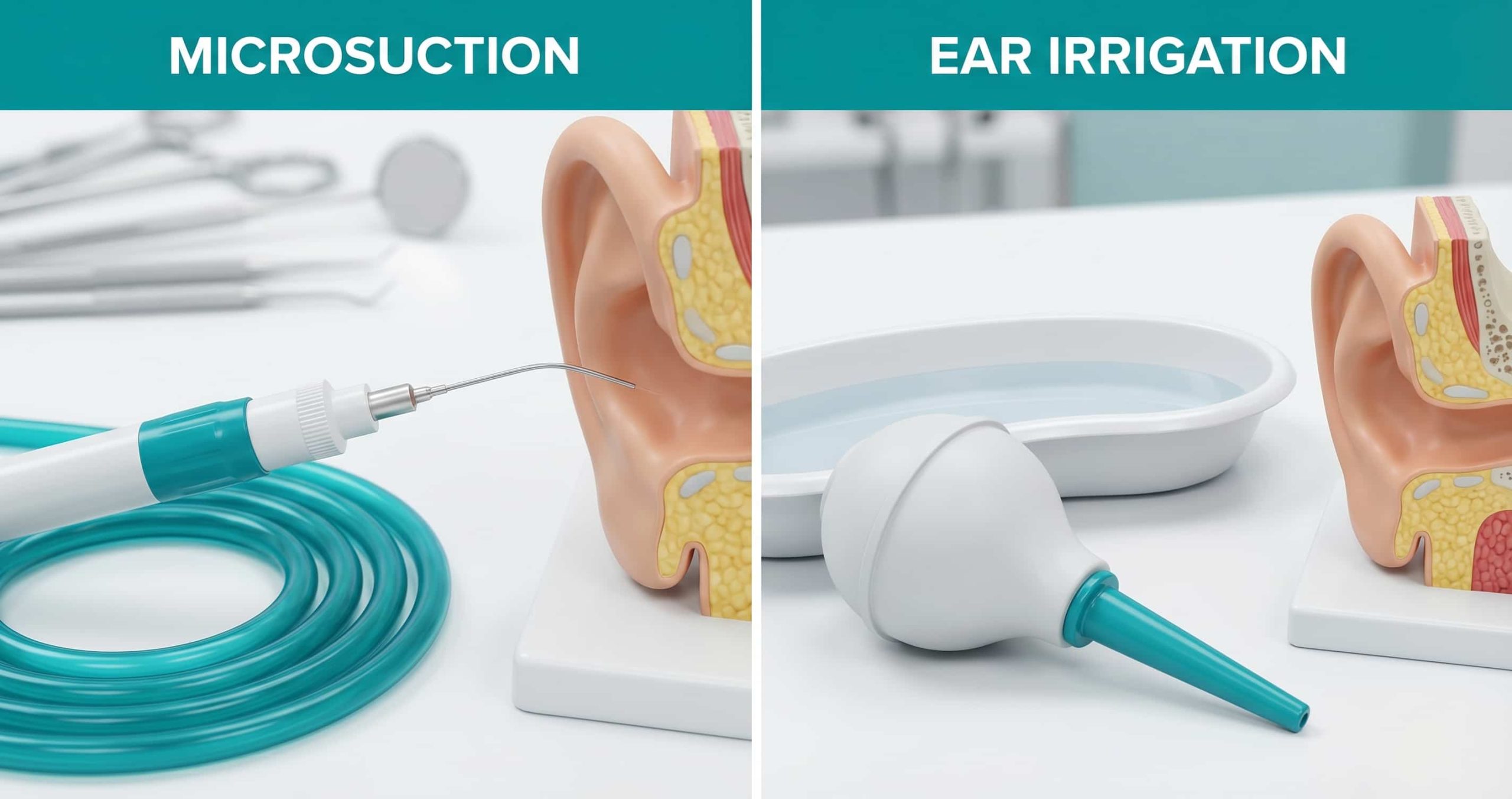
Microsuction uses gentle suction under direct visual guidance to remove ear wax without introducing water into the ear canal, while ear syringing (irrigation) uses pressurised water to flush wax out. Microsuction is generally considered the safer option because it avoids the risks associated with water in the ear canal — making it suitable for people with perforated eardrums, grommets, previous ear surgery, or a history of ear infections. Both methods are effective for removing ear wax, but clinical guidelines increasingly favour microsuction for its safety profile and precision.
If you have been putting off having your ear wax removed because you are not sure which method is right for you — or because a past experience with ear syringing was uncomfortable — this guide will help you understand the key differences between the two most common clinical approaches and make an informed decision.
What Is Microsuction?
Microsuction is a clinical ear wax removal procedure in which a trained clinician uses a fine, low-pressure suction device to gently extract wax from the ear canal under direct visual guidance. The clinician views the ear canal through a microscope, loupes, or an endoscope — meaning they can see exactly what they are doing at all times. No water is introduced into the ear canal.
The procedure is considered a “dry” method, which is significant because it eliminates the risks associated with introducing moisture into the ear — including the risk of infection in ears with perforations, grommets, or a history of middle ear disease. Microsuction typically takes 20–40 minutes per appointment (for both ears) and can be performed in most audiology clinics without any special preparation, although using softening drops for 3–5 days beforehand may make the procedure faster and more comfortable.
What Is Ear Syringing (Irrigation)?
Ear syringing — more accurately called ear irrigation in modern practice — involves directing a controlled stream of warm water into the ear canal to dislodge and flush out ear wax. The water pressure softens the wax and carries it out of the canal. Traditional syringing used a metal syringe; modern irrigation systems use electronic devices that allow more precise pressure control.
Ear irrigation has been used for decades and remains available in many GP practices and some clinics. It can be effective for soft or moderately impacted wax but is contraindicated (not suitable) for certain patient groups — including those with perforated eardrums, grommets, previous ear surgery, active ear infections, or a history of radiation therapy to the head or neck.
How They Compare: Safety, Comfort and Effectiveness
Safety
Microsuction is generally considered to carry a lower risk profile than ear irrigation. Because no water enters the ear canal, the risks of infection, dizziness from temperature-related vestibular stimulation (caloric effect), and trauma from hydraulic pressure are eliminated. Microsuction’s direct visualisation also reduces the risk of accidental contact with the eardrum, as the clinician can see the canal throughout the procedure.
Ear irrigation carries a small but recognised risk of complications including eardrum perforation (from excessive water pressure), otitis externa (ear canal infection from moisture), vertigo (from caloric stimulation of the vestibular system), and pain. These risks are relatively low when the procedure is performed by a trained professional using modern electronic irrigation equipment, but they are inherently higher than microsuction’s risk profile because water is being introduced into a sensitive environment.
It is important to note that microsuction is not without any risk. Possible side effects include temporary noise discomfort (the suction device produces a sound near the ear), very occasional minor canal abrasion, and rare instances of temporary tinnitus or dizziness. These are generally mild and short-lived. Serious complications from microsuction are very rare when performed by a trained practitioner.
Comfort
Patient comfort varies between individuals, and both methods can be performed comfortably by an experienced clinician. Microsuction may feel unusual due to the suction sensation and the sound of the device, but most patients describe it as mildly uncomfortable at most. Ear irrigation can feel more invasive due to the sensation of water filling the ear canal, and the possibility of brief dizziness during the procedure. Many patients who have experienced both methods report a preference for microsuction.
Effectiveness
Both methods are effective at removing ear wax when performed by a qualified professional. Microsuction is particularly effective for hard, impacted, or deeply positioned wax because the clinician has direct visualisation and precise control. Ear irrigation works well for softer wax but may struggle with very hard or tightly impacted blockages. In some cases, pre-treatment with softening drops for several days before the appointment improves the effectiveness of both methods.
Comparison Summary
- Microsuction: Dry method, direct visualisation, suitable for all ear types including perforated eardrums and grommets, lower complication risk, 20–40 minutes, available in audiology clinics
- Ear irrigation: Water-based, effective for soft wax, contraindicated for perforated eardrums/grommets/active infections, slightly higher complication risk, available in GP practices and some clinics
Who Should Choose Which Method?
Microsuction is recommended for:
- Anyone with a perforated eardrum or history of perforation
- People with grommets (ventilation tubes) in place
- People with a history of ear surgery
- Those with active or recurrent ear infections
- People who experience dizziness or vertigo
- Anyone who has had an uncomfortable experience with ear syringing in the past
- Hard, deeply impacted, or long-standing wax blockages
- Anyone who simply prefers a dry, no-water method
Ear irrigation may be suitable for:
- People with no history of ear problems, perforations, or surgery
- Soft to moderately impacted wax
- People who have used irrigation successfully in the past without complications
At All Ears in Hearing, we use microsuction as our standard ear wax removal method at both our Rochedale South and Shailer Park clinics. We believe it offers the safest, most precise, and most comfortable experience for the widest range of patients. If you are unsure whether microsuction is right for your situation, our team is happy to discuss your ear history before you book.
What to Expect During a Microsuction Appointment
A microsuction appointment at All Ears in Hearing is straightforward and typically takes 20–40 minutes. Here is what happens:
- Initial examination: Your audiologist will examine your ear canals using an otoscope to assess the type and position of the wax and check the condition of your eardrums.
- The procedure: Using a microscope or loupes for magnification, the audiologist gently inserts the fine suction tip into the ear canal and removes the wax under direct visualisation. You may hear a mild humming or suction sound — this is normal.
- Post-procedure check: After the wax is removed, the audiologist checks that the canal is clear and examines the eardrum. If anything warrants further investigation — such as a perforation or an unusual finding — they will discuss this with you and recommend appropriate next steps.
- Advice: You will receive guidance on preventing future wax buildup and when to return if symptoms recur.
For information on microsuction pricing in Brisbane, see our dedicated cost guide. If you are not sure whether your symptoms indicate a wax blockage, that resource may also help you determine whether an appointment is warranted.
Ready to Book Your Microsuction Appointment?
All Ears in Hearing provides gentle, precise microsuction ear wax removal at our Rochedale South and Shailer Park clinics. Our experienced team will have you hearing clearly again in under an hour — with no water, no mess, and no pressure.
Rochedale South: (07) 3841 3764 | Shailer Park: 0478 282 561
Frequently Asked Questions
Is microsuction safer than ear syringing?
Microsuction is generally considered to carry a lower risk profile than ear syringing because it does not introduce water into the ear canal. This eliminates the risks of hydraulic pressure damage, moisture-related infection, and caloric vertigo that are associated with water-based irrigation. Microsuction’s direct visualisation also allows the clinician to see the ear canal throughout the procedure, reducing the risk of accidental contact with the eardrum. Both methods can be performed safely by trained professionals, but microsuction is the preferred method for patients with perforated eardrums, grommets, or a history of ear surgery.
Does microsuction hurt?
Microsuction is generally not painful. Most patients describe the sensation as mildly unusual rather than uncomfortable — you may feel a gentle suction sensation and hear a low humming sound as the device works. Some people find the sound of the suction device slightly louder than expected, but this is typically well-tolerated. Brief, mild discomfort may occur if the wax is particularly hard or tightly impacted, but your clinician will work gently and can pause at any time if you need a break.
Do I need to use ear drops before microsuction?
Using softening drops — such as olive oil or sodium bicarbonate drops — for 3–5 days before your microsuction appointment can make the procedure faster and more comfortable by softening the wax. However, it is not strictly required. Your audiologist can usually remove wax of any consistency. If your ear is acutely painful or you suspect an infection, do not use drops and consult your clinician or GP before your appointment.
Can microsuction be done if I have a perforated eardrum?
Yes. Microsuction is considered safe for people with perforated eardrums because it is a dry procedure — no water enters the ear canal. This is one of the key advantages of microsuction over ear irrigation, which is contraindicated for perforated eardrums due to the risk of water entering the middle ear and causing infection. Your audiologist will examine your eardrum before and after the procedure and will take appropriate care around the perforation.
How often should I have my ears professionally cleaned?
The frequency of professional ear wax removal depends on your individual wax production rate. Some people rarely need professional removal, while others produce wax more quickly and may benefit from removal every 6–12 months. If you find that wax blockage is a recurring problem, your audiologist can advise on an appropriate maintenance schedule and recommend strategies to help manage wax buildup between appointments. Using cotton buds to clean the ears is not recommended, as this typically pushes wax deeper into the canal.
Sources and References
- ENT UK — Guidance on Ear Wax Removal Methods
- Audiology Australia — Cerumen Management Clinical Guidelines
- National Institute for Health and Care Excellence (NICE) — Ear Wax Removal
- Therapeutic Goods Administration — Medical device classifications
Individual suitability may vary. We recommend a professional assessment to determine the most appropriate ear wax removal method for your specific ear history. Information current as of April 2026.