
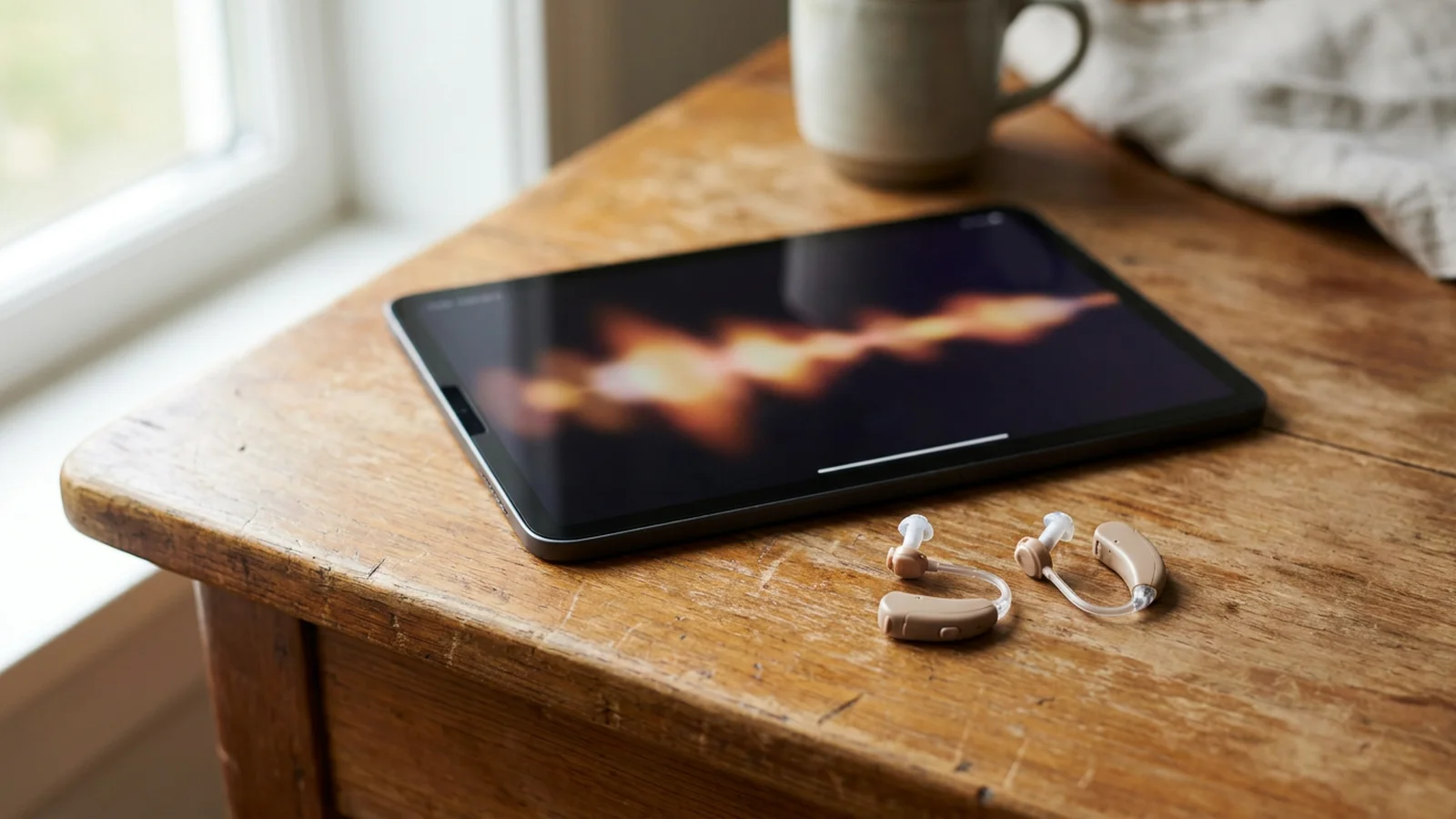
Many hearing aids offer different programs and settings designed to suit a variety of everyday situations. From quiet rooms to livelier places, these options give your devices flexibility as your surroundings change. Understanding the general idea can help you feel more confident about getting the most from your hearing aids. It can also help you describe your needs at appointments. Hearing aid programs and settings are a common topic at our Brisbane clinic, and the general ideas apply across Logan and surrounding areas.
This overview explains programs and settings in a general way. The exact options on your devices depend on the model and how it has been set up for you, so your audiologist is the right person to explain the specifics. Consider this a friendly introduction rather than a guide to any single device. Your hearing care professional can tailor the details to you.
What hearing aid programs are
A program on a hearing aid is essentially a set of adjustments suited to a particular kind of situation. For example, one program might be intended for quiet conversation, while another suits a busier environment. Having a few programs to choose from gives some people more flexibility across their day. The idea is to match the device to the moment, so it responds sensibly to wherever you happen to be. Each program is simply a starting point that can be discussed with your audiologist.
The number and type of programs vary between hearing aids, and not every device works the same way. Some keep things simple, while others offer more choice. Your hearing care professional can explain which programs your particular hearing aids include. They can also describe what each one is designed for.
Why different settings help across listening environments
Everyday life involves a wide mix of sound environments, and a single setting does not always suit them all. Different programs are intended to respond to these varied situations, from calm spaces to noisy ones. In busier places, background noise can make listening harder, and different settings are intended to suit different situations across your day. It helps your devices keep pace with your surroundings.
Which settings are useful depends very much on your lifestyle and the situations you encounter most. Someone with busy days may value different options from someone whose days are quieter. During a fitting, your audiologist can discuss the environments that matter most to you. This helps shape how your devices are set up.
Automatic and manual settings with buttons or a remote control
Some hearing aids are designed to adjust their settings automatically as they detect changes in the surrounding sound. Others rely more on the wearer choosing a setting manually, adjusting the volume with buttons, a remote control or a smartphone app. Many devices offer a mix of both approaches. The right balance often comes down to personal preference.
Whether your hearing aids adjust automatically or need manual changes depends on the model. There is no single way that applies to every device. Your hearing care professional can explain how your particular devices handle this. They can also show you what to do in each situation.
Switching between programs
For devices with manual programs, switching between them is usually done with a button, a remote control or a smartphone app. Getting familiar with how to change programs can help you use different settings throughout your day. Like any new skill, it often becomes familiar with a little practice. Trying it in a calm moment can help it feel familiar.
If you are unsure how to switch between programs, there is no need to worry. It is a common thing to ask about. Your audiologist can walk you through the steps. They can also let you practise until you feel confident.
Common types of settings
While every hearing aid is different, some settings are commonly discussed, such as those intended for quiet conversation, busier environments or other specific situations. These are set up to suit the way you live and the places you spend time. The idea is to give your devices helpful flexibility. The exact mix depends on your hearing aids and your needs.
- A general everyday setting
- An option intended for noisier places
- Settings for specific situations you encounter often
Programs for background noise and volume
Settings are not set in stone, and they can be reviewed as you settle into wearing your hearing aids. If you find certain situations tricky, sharing this at a follow-up appointment gives your audiologist useful information. Adjustments can then be discussed based on your experience. Describing specific moments makes these conversations more helpful.
Your needs and surroundings can change over time, so periodic reviews help keep your settings suited to you. What worked at first may be worth revisiting later. Regular check-ins with your hearing care professional are a good way to keep everything working as intended. They keep your devices in step with your daily life.
Fine-tuning settings with your audiologist
Getting familiar with programs and settings is not something that has to happen overnight. Many people start with the everyday setting and gradually explore others as they grow more confident. There is no need to use every option straight away, and moving at your own pace is perfectly fine.
If a particular setting does not feel useful, that is quite alright, and it can simply be left aside. What matters is finding what works for your daily life. Your audiologist can help you get familiar with the options at a pace that suits you, revisiting them at future appointments as needed.
If you would like to learn more, or to arrange a hearing appointment, you are welcome to get in touch with our friendly team. No referral is necessary, and we are happy to answer any questions you may have.
DISCLAIMER:
The information on this website is provided for educational purposes only. We do not support, nor recommend any products or treatments without proper hearing diagnostic and proper hearing evaluation. All users must seek professional advice before beginning treatment as well as inform themselves of known side effects/risks associated with said procedure(s).
Disclaimer: The information in this article is general in nature and provided for educational purposes only. It does not take into account your individual circumstances and is not a substitute for professional advice. Please consult a qualified hearing health professional about your specific needs.
Related articles
- Understanding Your Hearing Aid Fitting Appointment
- Understanding Hearing Aid Technology Levels
- Understanding Feedback (Whistling) in Hearing Aids
Looking for a hearing test or ear care? See hearing tests, hearing aids or book an appointment. Browse all articles.