
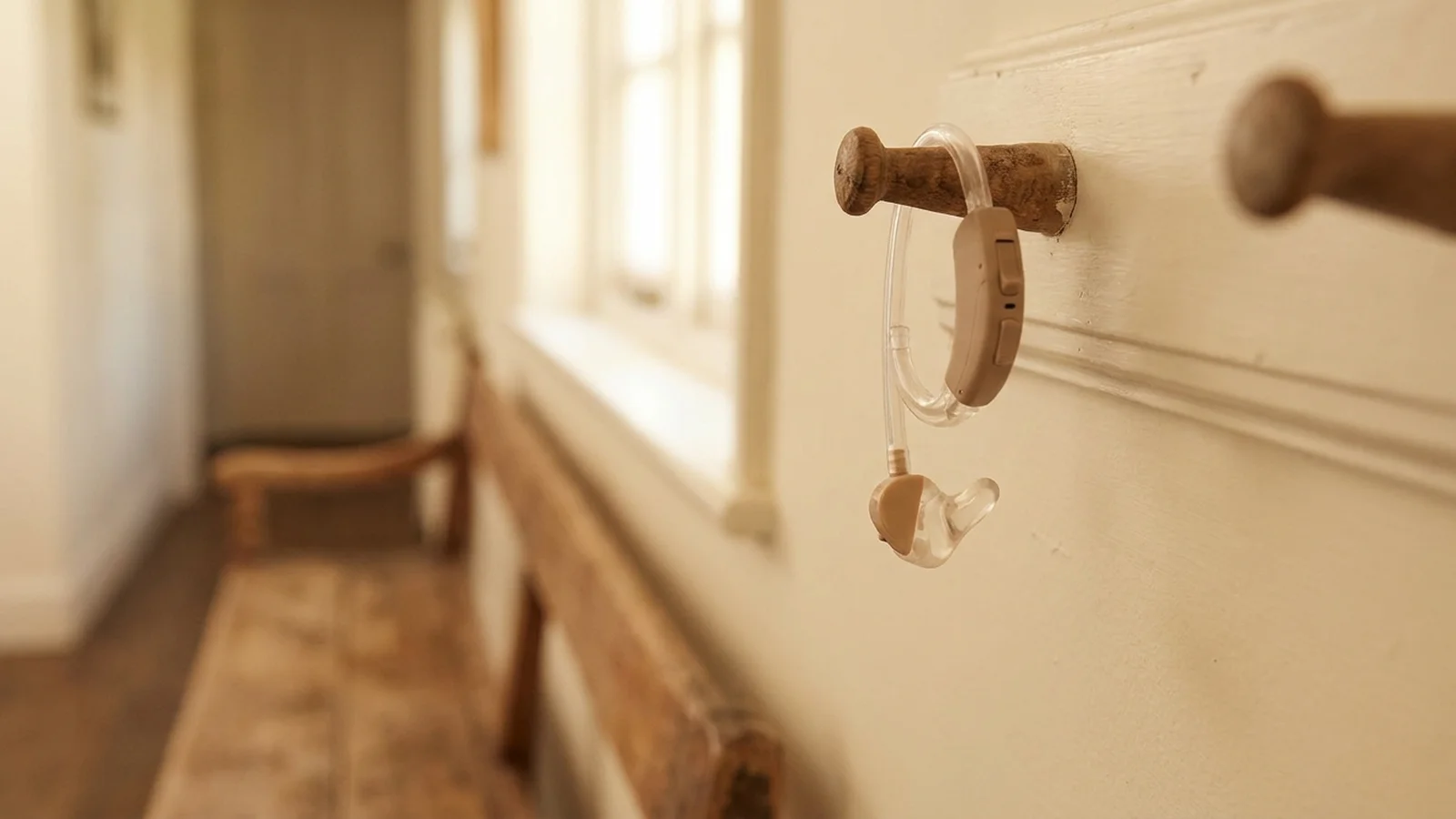
Behind-the-ear hearing aids, often shortened to BTE, are one of the more widely recognised styles of hearing aid. As the name suggests, the main part of the device sits behind the ear, with a connection that carries sound into the ear itself. Many people find this a familiar and practical style, and it is helpful to understand how it is put together.
This general overview explains how BTE hearing aids are worn, the main parts involved, and some points people often think about. It is not a recommendation of any particular device, and an audiologist is the right person to discuss what may suit your individual needs. Understanding the basics can make any conversation about options feel easier.
How Behind-the-Ear (BTE) Hearing Aids Are Worn
With a behind-the-ear hearing aid, the housing that holds the working parts rests over the top and behind the outer ear. From there, a thin tube or wire carries sound forward into the ear canal. The part that sits behind the ear is shaped to follow the natural curve, so it can rest in place.
Because the main body sits outside the ear, some people find this style straightforward to handle. The way it sits also means the ear canal is not fully filled.
The Main Parts of a BTE Device
A behind-the-ear hearing aid is generally made up of a few key parts working together. The main housing contains the electronics that pick up and process sound. A connecting tube or wire then carries the sound towards the ear, where a tip or earpiece delivers it into the ear canal.
Many devices also include controls or a power source, whether a battery or a rechargeable system. Your audiologist can show you exactly how the parts on your particular device fit together and work. Getting to know these parts makes daily handling and cleaning feel much more manageable.
How the Earpiece Connects
The way a BTE hearing aid delivers sound into the ear can vary. Some use a soft, ready-made tip that sits gently in the ear canal, while others use a custom earpiece shaped to the individual ear. The choice often comes down to the particular fit that works for a person.
A hearing care professional can explain the general differences between these approaches. They can also make sure that whatever sits in your ear fits well and stays in place during everyday activities. If anything feels off, small adjustments are a normal part of getting the fit right.
Fit and Everyday Handling
Some people like the larger size of behind-the-ear devices, which can make handling and cleaning feel more manageable. For those who find very small devices fiddly, this can be a helpful feature. Glasses wearers sometimes take a little time to find the arrangement that suits them best, and this usually settles with practice.
Fit is very individual, so it is worth talking through any concerns during a fitting. Small adjustments can often be made so that the device sits well for you. There is no need to persevere with anything that does not feel right, as your experience matters.
Cleaning and Everyday Handling of BTE Hearing Aids
As with any hearing aid, keeping a behind-the-ear device clean and dry supports its day-to-day condition. The tubing and earpiece can gather moisture or wax over time, so a gentle daily wipe and regular checks are part of ordinary care. Storing the device somewhere dry when it is not in use is also sensible.
Your audiologist can show you a simple routine suited to your device and provide the right small tools. Regular servicing is another normal part of keeping things working smoothly. A little daily attention tends to be easier than an occasional big effort.
Points People Often Consider About the Earpiece
When people think about a behind-the-ear style, they often weigh up fit, ease of handling, and how visible the device is. Some appreciate the practical size, while others prefer something smaller. There is no single answer, as the right choice depends on the person and their preferences and needs.
An audiologist can talk through these considerations with you in a relaxed way. Rather than pointing to one option as superior, they can help you understand how different styles relate to your own situation. This kind of unhurried conversation often makes a decision feel clearer.
Speaking With an Audiologist
Choosing a hearing aid is a personal decision, and it helps to have a knowledgeable professional alongside you. An audiologist can assess your hearing, explain the options in plain language, and answer your questions without any pressure. This is a good way to understand whether a behind-the-ear style could suit you.
Taking the time to ask questions is always encouraged. The more you understand about how a device works, the more confident you are likely to feel about your choices. There is no such thing as a silly question when it comes to your hearing.
Living With a BTE Day to Day
Once a behind-the-ear device becomes part of your routine, some people find it fades into the background of daily life. Putting it on in the morning and taking it off in the evening soon becomes as ordinary as any other daily task. Building a few small habits around it, such as a gentle wipe and safe storage, helps keep everything running smoothly.
If any part of daily wear feels awkward or you have questions as time goes on, a follow-up appointment is always available. Your audiologist can make small adjustments and offer tips suited to your everyday life. There is no need to simply put up with anything that does not feel right.
Behind-the-ear (BTE) hearing aids sit behind the ear, with an earpiece or tubing carrying sound gently into the ear canal. Because the main part rests behind the ear, some people find the everyday handling and cleaning straightforward once it becomes a routine. As with any style, fit varies from person to person.
An audiologist can talk through whether behind-the-ear hearing aids might suit your needs. Our team in Brisbane and Logan is happy to explain how a BTE earpiece connects and to answer any questions about everyday handling and cleaning.
If you would like to learn more, or to arrange a hearing appointment, you are welcome to get in touch with our friendly team. No referral is necessary, and we are happy to answer any questions you may have.
DISCLAIMER:
The information on this website is provided for educational purposes only. We do not support, nor recommend any products or treatments without proper hearing diagnostic and proper hearing evaluation. All users must seek professional advice before beginning treatment as well as inform themselves of known side effects/risks associated with said procedure(s).
Disclaimer: The information in this article is general in nature and provided for educational purposes only. It does not take into account your individual circumstances and is not a substitute for professional advice. Please consult a qualified hearing health professional about your specific needs.
Related articles
- Directional Microphones in Hearing Aids Explained
- Completely-in-Canal (CIC) Hearing Aids Explained
- In-the-Ear (ITE) Hearing Aids Explained
Looking for a hearing test or ear care? See hearing tests, hearing aids or book an appointment. Browse all articles.