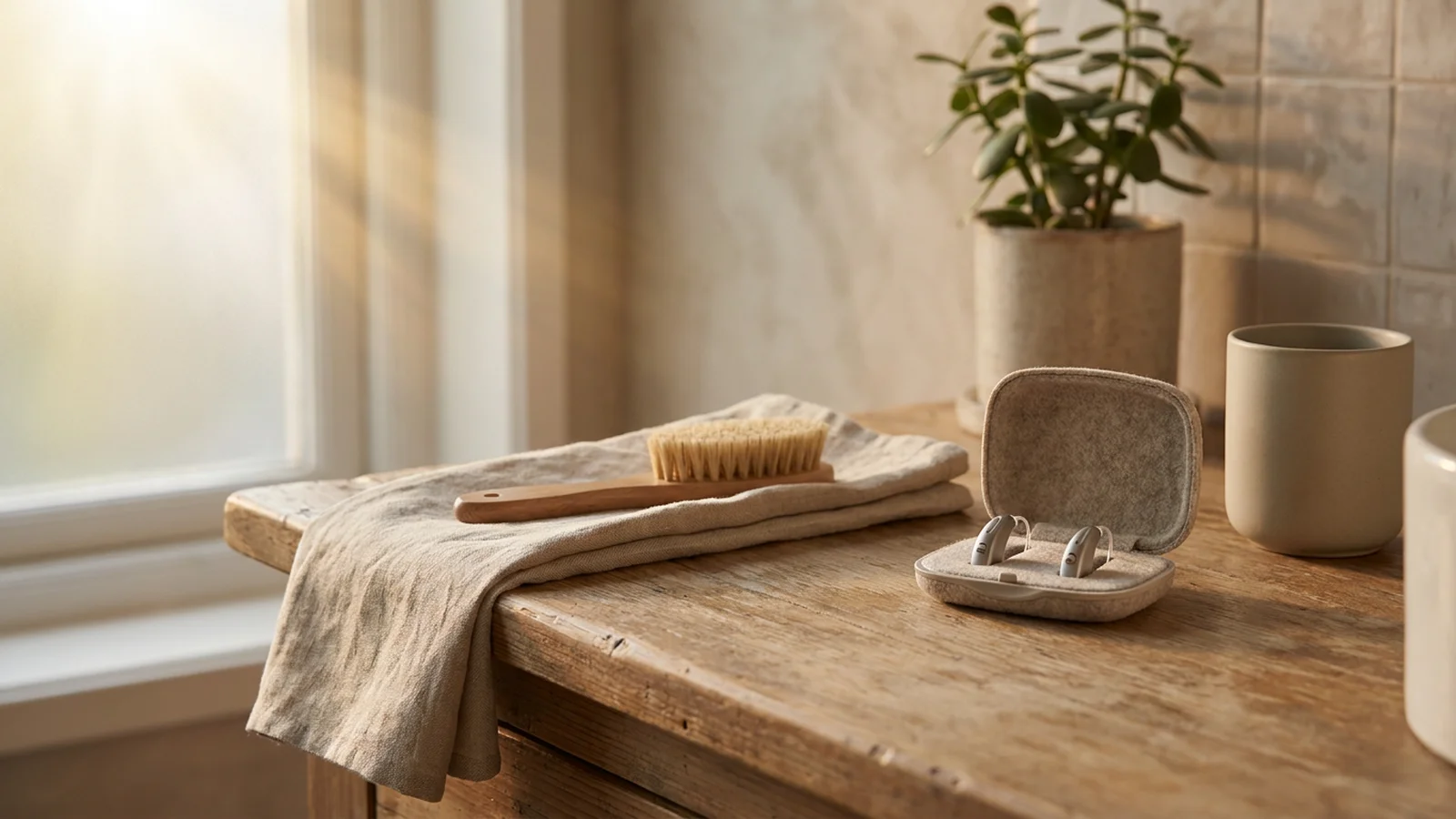
A little daily attention can go a long way towards keeping hearing aids clean and in good condition. Just as you might have a simple routine for other things you use every day, a short cleaning habit for your hearing aids soon becomes second nature. It need not be complicated or time-consuming.
This is general information about building a daily cleaning routine. It is not advice for any particular device, and your audiologist can show you a routine tailored to your specific hearing aids and answer any questions you have. Keeping things little and often makes the habit easy to maintain, and it soon becomes second nature. A few moments each day is usually all it takes to keep your devices in good order.
Why a Daily Routine Helps Keep Hearing Aids Clean
Hearing aids sit in or near the ear throughout the day, so they naturally come into contact with moisture and everyday residue. A short daily clean helps clear this away before it builds up. Keeping on top of it little and often is easier than an occasional big effort.
A regular habit also means you notice your device day to day, so anything unusual is more likely to catch your attention. This gentle familiarity is a quiet benefit of a daily routine. It helps you feel confident and in control of your device's care.
Choosing a Consistent Time
Many people find it helps to attach their cleaning routine to an existing daily habit. Cleaning your hearing aids each evening when you take them out, for example, ties it neatly to the end of the day. A consistent time makes it far easier to remember.
Whatever time you choose, the aim is to make it effortless. Once it is part of your rhythm, it takes very little thought at all. Building it around something you already do each day helps it stick.
A Gentle Wipe to Keep Hearing Aids Clean
A good starting point is a gentle wipe with a soft, dry cloth. This clears away everyday moisture and residue from the surfaces of the device. It only takes a moment and is a kind, simple way to care for your hearing aids.
It is generally better to avoid water, sprays, or wipes unless your audiologist has recommended something specific. A soft, dry cloth is usually all that is needed for this step. Keeping it simple makes the routine quick and easy.
Checking the Parts That Sit in the Ear
The parts of a hearing aid that sit in the ear can gather a little earwax over the day. Gently checking and clearing these openings helps keep the device clean. Many hearing aids come with small tools designed for this purpose.
This is about the hearing aid itself. If you think earwax is building up in your ear, please see your GP or an audiologist rather than trying to clear it yourself.
Your audiologist can show you how to use these tools safely and how often to check. Learning the right technique means you can do this with confidence. There is no need to guess when a demonstration is readily available.
Letting Them Air and Dry
After cleaning, giving your hearing aids a chance to air and dry overnight is a helpful habit. Leaving them somewhere dry and airy helps manage any lingering moisture. This simple step supports their day-to-day condition.
Some people use a drying container made for hearing aids as part of this routine. Your audiologist can let you know whether this suits your device and how to use it. It can be a handy addition to your daily habit.
Handling Over a Soft Surface
Because hearing aids are small, cleaning them over a soft surface such as a folded towel can help avoid knocks if you drop them. Working somewhere with good light also makes the task easier. Taking your time keeps the routine calm and unhurried.
If you find the small parts fiddly, there are techniques that can help. Your hearing care professional is happy to show you approaches that suit you. A little practice usually makes handling feel more natural.
Knowing When to Seek Help From an Audiologist
If, during your daily routine, something does not seem right or you are unsure how to clear a stubborn bit of residue, it is fine to seek help. There is no need to force anything. A professional can give your device a thorough clean and check it over.
Regular servicing works alongside your daily habit to keep things in good shape. Your audiologist can suggest a schedule that suits your device and your routine. A quick check can offer real peace of mind.
A Routine You Can Rely On
The value of a daily cleaning routine is that it quietly keeps your devices in good order without much fuss. Once it becomes a habit, you barely notice the few moments it takes each day. Many people find that a settled routine gives them one less thing to think about.
If your routine ever feels like a chore, or you are unsure whether you are doing something correctly, it is worth asking. Your audiologist can suggest simple tweaks or refresh your technique so it feels easy again. Feeling confident about daily care helps you enjoy wearing your hearing aids. There is always someone happy to help, so you never need to puzzle over anything alone. A quick word with your audiologist can set your mind at ease and keep your routine feeling simple.
Keeping hearing aids clean is easiest when it becomes a small daily routine. A gentle wipe first, then checking the parts that sit in the ear for earwax, takes only a moment. Handling them over a soft surface and letting them air and dry rounds out an easy habit.
If something looks worn or a device does not sound right, there is no need to guess. Our team in Brisbane and Logan is happy to help with keeping hearing aids clean and answer any questions.
If you would like to learn more, or to arrange a hearing appointment, you are welcome to get in touch with our friendly team. No referral is necessary, and we are happy to answer any questions you may have.
DISCLAIMER:
The information on this website is provided for educational purposes only. We do not support, nor recommend any products or treatments without proper hearing diagnostic and proper hearing evaluation. All users must seek professional advice before beginning treatment as well as inform themselves of known side effects/risks associated with said procedure(s).
Disclaimer: The information in this article is general in nature and provided for educational purposes only. It does not take into account your individual circumstances and is not a substitute for professional advice. Please consult a qualified hearing health professional about your specific needs.
Related articles
- Getting the Most from Your Hearing Aids
- Caring for Hearing Aids in Winter
- Getting Ready for the Festive Season with Hearing Aids
Looking for a hearing test or ear care? See hearing tests, hearing aids or book an appointment. Browse all articles.