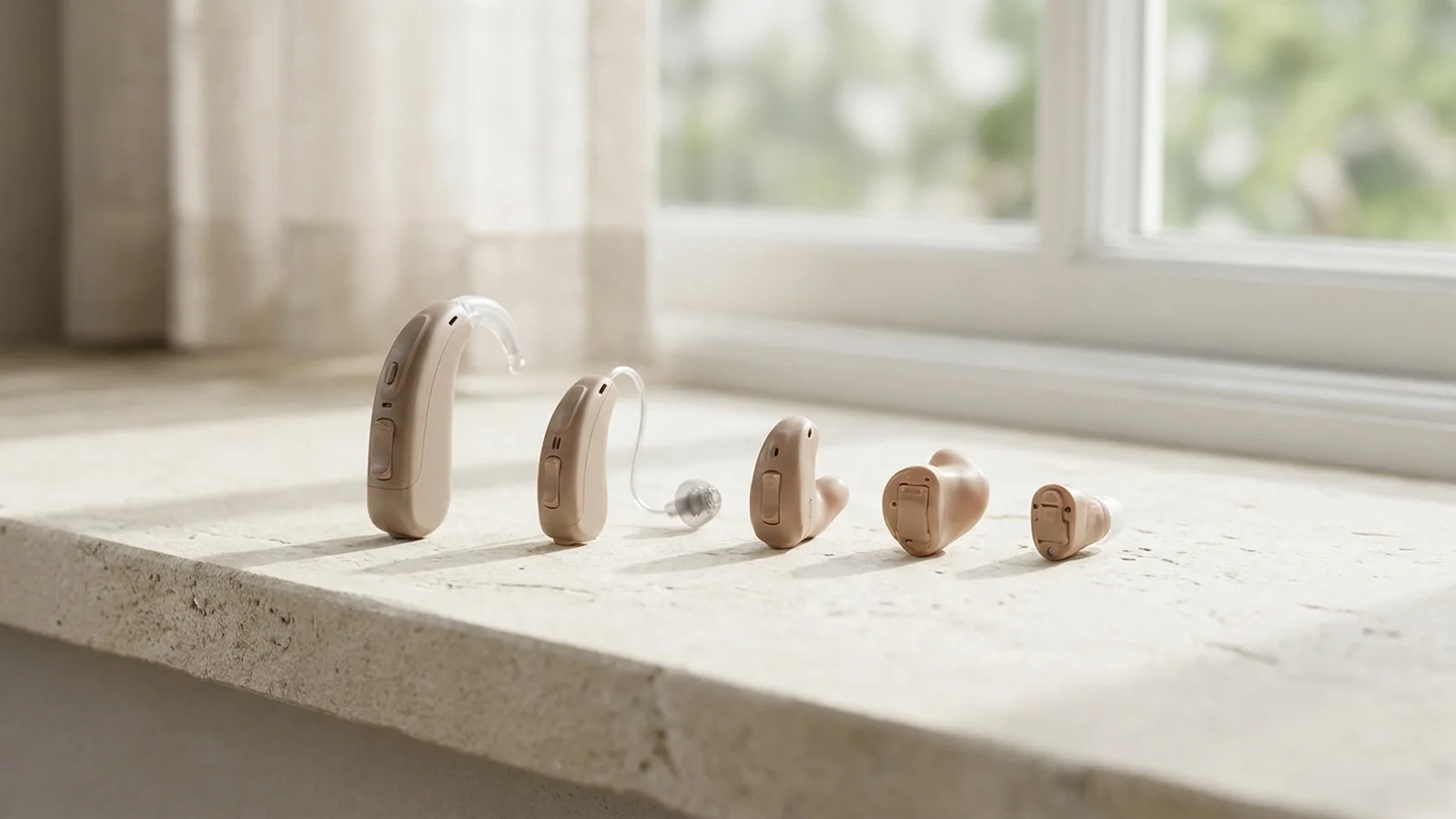
Hearing aids come in a range of styles, each designed to suit different needs and preferences. From devices that sit behind the ear to smaller ones that fit within it, the variety can seem a lot to take in at first. Understanding the common styles in a general way can help you feel more informed when talking with your hearing care professional. It also makes it easier to describe what matters most to you. The different styles of hearing aids are something our Brisbane and Logan clients often explore, as do many people across Australia.
This guide introduces the main styles and what tends to set them apart. The style that suits you depends on many personal factors, so an audiologist is always the right person to advise. Think of this as a friendly overview rather than a recommendation for any particular option. Your hearing care professional can relate each style to your own situation.
Behind-the-ear styles
Behind-the-ear hearing aids sit, as the name suggests, behind the ear, with a part that connects to the ear canal. This style is one of the more familiar designs and comes in a range of sizes. Because the main body sits outside the ear, some people find these devices relatively straightforward to handle. This can be reassuring for those new to hearing aids.
Behind-the-ear styles suit a variety of needs, and there is considerable variation within the category. They are not a single design but a broad family of options. Your hearing care professional can explain how this style might relate to your particular situation. They will take your preferences and hearing needs into account.
Receiver-in-canal styles
Receiver-in-canal hearing aids share some similarities with behind-the-ear devices but place a small component within the ear canal, connected by a thin wire. This design is often relatively discreet while keeping part of the device behind the ear. Many people appreciate the balance this style aims to offer. It combines features of different designs in one option.
As with all styles, receiver-in-canal devices suit some people better than others. The right choice depends on your ears and preferences. Your audiologist can discuss whether this design is worth considering for your needs. They can explain how it compares with other options in plain terms.
In-the-ear styles
In-the-ear hearing aids are custom-made to sit within the outer part of the ear. Because they are shaped to the individual, they can offer a tailored fit for some people. This style sits more within the ear than behind it, which some find appealing. The custom shaping is part of what defines this design.
In-the-ear devices come in different sizes, and their suitability depends on personal factors. They are not right for everyone, and that is perfectly normal. Your hearing care professional can explain how this style might fit with your circumstances. They will consider your ears and everyday needs.
In-the-canal and smaller, discreet styles
Smaller custom styles, such as those that sit further within the ear canal, are designed to be more discreet. Their compact size appeals to some people who prefer a less visible device. Because they are small, handling and everyday care can differ from larger styles. This is worth keeping in mind when weighing up your options.
These smaller styles are not suitable for everyone, and the choice involves several considerations. Size is just one of many factors to think about. Your audiologist can talk through whether a more discreet style is appropriate for you. They can explain the practical trade-offs involved.
Comparing the different styles of hearing aids
Choosing a style involves more than appearance, taking in fit, handling, lifestyle and personal preference. Some people prioritise ease of handling, while others value discretion or particular features. There is no single right answer, as it comes down to what works for the individual. Taking time to reflect on your own priorities helps.
- How the device feels to wear
- How easy the style is to handle day to day
- Your lifestyle and the situations you spend time in
- Personal preferences around size and appearance
How your audiologist can help you choose
With so many factors to weigh up, talking things through with a hearing care professional can help when choosing a style. An audiologist can explain the options in relation to your hearing, your ears and your everyday life. This personalised guidance helps you feel confident in whatever you decide. It turns a big decision into a manageable conversation.
There is no need to feel you must know everything in advance, as the process is collaborative. You can bring your questions and work through them together. Your hearing care professional is there to help you find a style that feels right for you. They will support you at every step of the decision.
Fit and size
It can be helpful to reflect on your everyday habits when thinking about hearing aid styles. Consider how active your days are, how you like to handle small items and where you spend most of your time. These practical details often matter just as much as appearance.
There is no need to have firm answers before your appointment, as these are things you can explore together. Sharing a little about your daily life helps your audiologist guide you. From there, you can weigh up which style feels right for you.
If you would like to learn more, or to arrange a hearing appointment, you are welcome to get in touch with our friendly team. No referral is necessary, and we are happy to answer any questions you may have.
DISCLAIMER:
The information on this website is provided for educational purposes only. We do not support, nor recommend any products or treatments without proper hearing diagnostic and proper hearing evaluation. All users must seek professional advice before beginning treatment as well as inform themselves of known side effects/risks associated with said procedure(s).
Disclaimer: The information in this article is general in nature and provided for educational purposes only. It does not take into account your individual circumstances and is not a substitute for professional advice. Please consult a qualified hearing health professional about your specific needs.
Related articles
- Understanding Feedback (Whistling) in Hearing Aids
- Getting the Most from Your Hearing Aids
- Caring for Hearing Aids in Winter
Looking for a hearing test or ear care? See hearing tests, hearing aids or book an appointment. Browse all articles.