
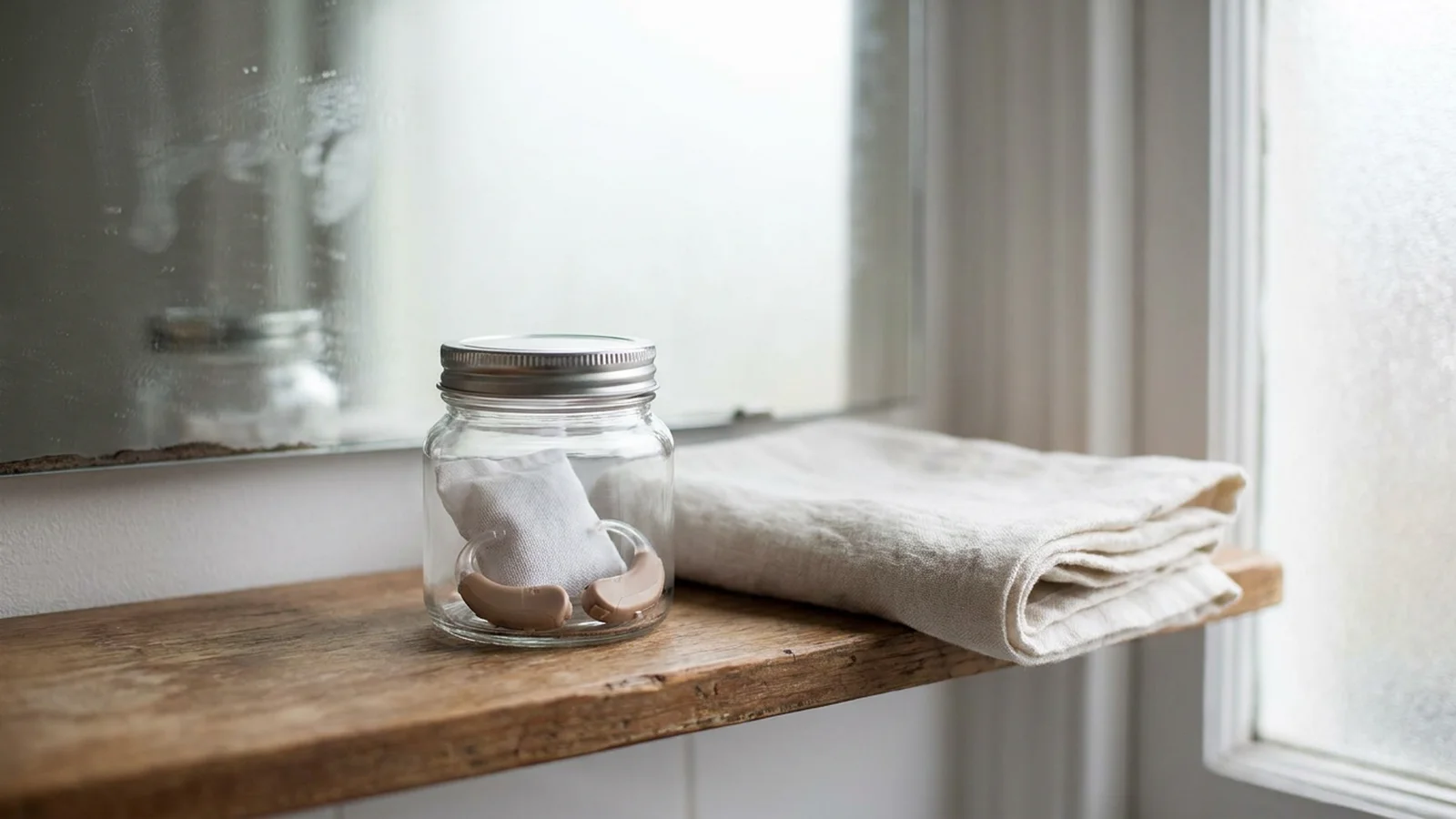
Hearing aids are worn throughout the day and often in changeable conditions, so a little thought about moisture can help keep them in good order. Everyday situations such as humidity, warmth, and physical activity can all introduce moisture, and a gentle care routine helps to manage this. Knowing a few simple habits can make ownership feel calm and predictable, without any fuss.
This article shares general care tips for keeping hearing aids dry. These are friendly suggestions rather than instructions for any particular device, and your audiologist can always advise on anything specific to the model you wear. Every device is a little different, so personal guidance is always worthwhile.
Why moisture matters for hearing aids
Because hearing aids are small electronic devices worn close to the body, moisture is worth being mindful of. Everyday sources such as humidity and warmth can affect how a device feels over time. A little care in this area is simply good, sensible upkeep, and it helps keep everything working smoothly from day to day.
Being aware of moisture does not need to feel like a chore. A few gentle habits, carried out consistently, are usually all that is needed to keep things predictable. Once these habits are part of your routine, they take very little thought at all.
A gentle daily care routine
One of the most helpful habits is to wipe your device gently at the end of each day. A soft, dry cloth is often all you need to remove everyday moisture and debris. This small, regular step tends to work far better than occasional deep cleaning, and it quickly becomes second nature.
Building this into a consistent part of your day makes it easy to remember. A steady routine helps keep your device feeling fresh and ready for the day ahead, so there is less to think about when you put it on each morning.
Thoughtful storage to keep your device dry
Where you keep your device when it is not in use can make a real difference. A clean, dry place away from heat and direct sunlight is usually a sensible choice. A consistent storage spot also helps you keep everything together and ready to use, so you always know where to find it.
- Wipe the device gently with a soft, dry cloth each day
- Store it in a clean, dry place away from heat
- Keep it away from water, sprays, and steam where you can
These are general suggestions rather than specific instructions. Your audiologist can show you the routine that suits the particular device you wear, so you feel confident caring for it day to day.
Everyday situations to be mindful of
Certain everyday moments naturally involve more moisture, and being mindful of these can help. Times such as exercising, bathing, or being out in wet weather are worth keeping in mind, as they can expose hearing aids to water. A little awareness in these situations helps you protect your device without any fuss, and it soon becomes an easy habit. Removing each device and giving the ear a moment to air after activity can also help everything stay dry.
This is not about avoiding daily life, but simply about being thoughtful. Small adjustments, such as removing a device before certain activities, can make a gentle difference over time and help keep everything in good order.
Helpful accessories to protect your device
There are various accessories designed to help keep hearing aids dry, and your audiologist can explain the general options. These can be a useful part of a care routine for some people, depending on their circumstances. A hearing care professional can advise on what might suit you and your particular device.
Rather than choosing something on your own, it is worth asking for guidance suited to your particular device. This helps ensure any accessory suits your routine and your particular device, so it adds to your everyday care rather than complicating it.
When to seek advice
If you notice any change in how your device feels or sounds, it is sensible to arrange a check rather than to wait and hope it settles. Early attention often makes routine matters simpler, and it gives you peace of mind in the meantime. There is no question too small to raise with a friendly team.
Because every device and every person is different, individual guidance is always the most reliable. A qualified audiologist can assess what is happening and advise on the most suitable next step for your particular situation, so you never have to work things out alone.
Making moisture care part of your routine
The easiest way to keep moisture in check is to weave a few simple habits into your everyday routine. When care becomes a natural part of your day, it takes very little thought and quickly becomes second nature. A consistent, gentle approach tends to be more manageable than occasional effort.
If you are ever unsure about the most suitable way to care for your particular device, there is no need to guess. A hearing care professional is always happy to talk through a routine that suits you, so that keeping your device dry feels easy and straightforward over the long term.
In short, a few gentle and consistent habits are usually all it takes to keep a device dry over the long term. With a simple daily routine, a little everyday awareness, and friendly professional support available whenever you need it, protecting your hearing aids from everyday moisture can be a simple part of your routine.
If you would like to learn more, or to arrange a hearing appointment, you are welcome to get in touch with our friendly team. No referral is necessary, and we are happy to answer any questions you may have.
DISCLAIMER:
The information on this website is provided for educational purposes only. We do not support, nor recommend any products or treatments without proper hearing diagnostic and proper hearing evaluation. All users must seek professional advice before beginning treatment as well as inform themselves of known side effects/risks associated with said procedure(s).
Disclaimer: The information in this article is general in nature and provided for educational purposes only. It does not take into account your individual circumstances and is not a substitute for professional advice. Please consult a qualified hearing health professional about your specific needs.
Related articles
- Getting the Most from Your Hearing Aids
- Caring for Hearing Aids in Winter
- Getting Ready for the Festive Season with Hearing Aids
Looking for a hearing test or ear care? See hearing tests, hearing aids or book an appointment. Browse all articles.