
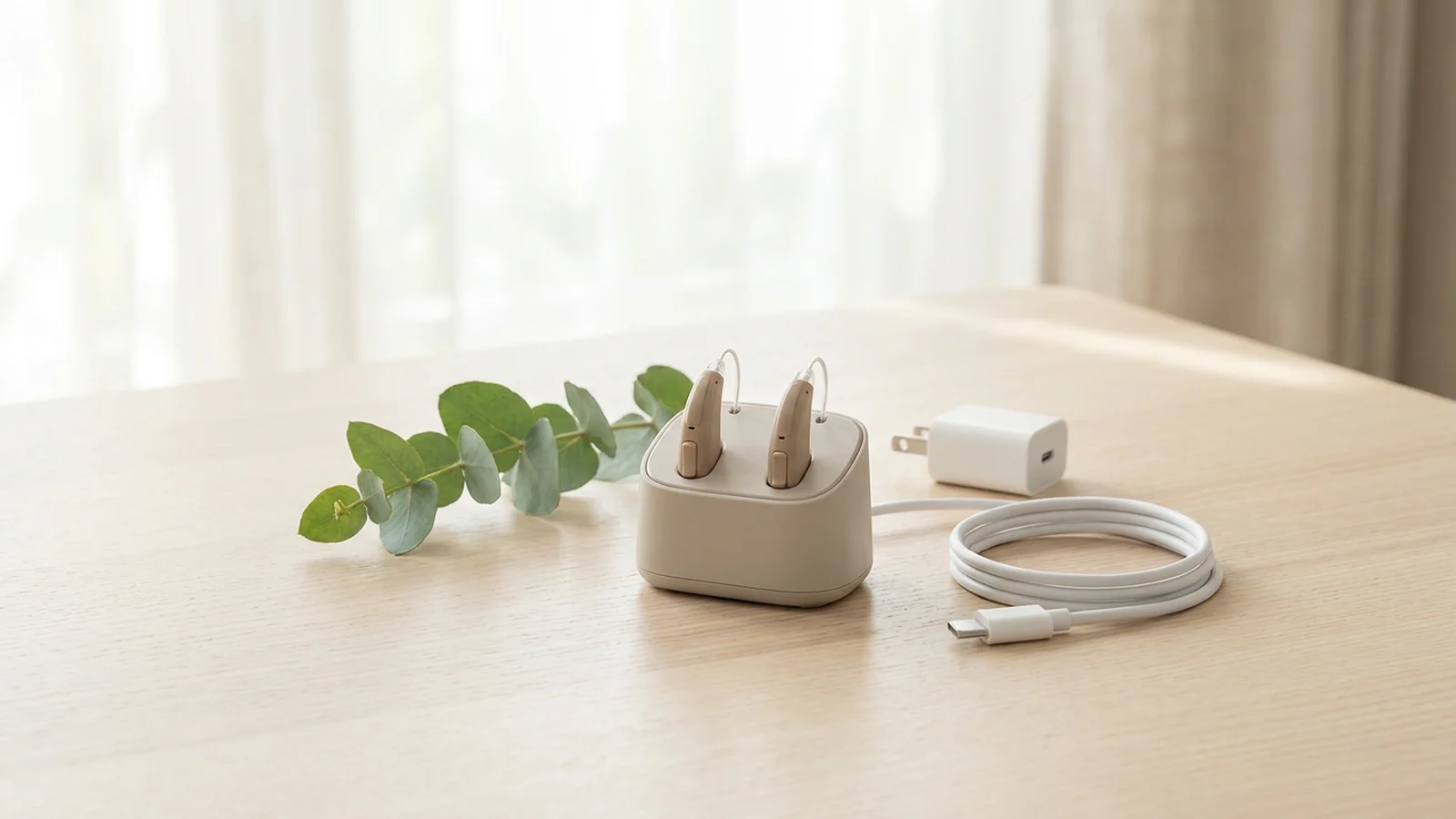
When it comes to keeping hearing aids powered, there are broadly two approaches. There are rechargeable devices, and those that use small disposable batteries. If you are exploring your options, you may be wondering how rechargeable and battery hearing aids compare. You may also want to know which might suit your day-to-day life better.
This article offers a general comparison to help you understand the differences. It is general information only. Your audiologist is the right person to advise you on what suits your ears, your hearing and your lifestyle. Our team looks after people across Brisbane and Logan, here in Australia.
How rechargeable hearing aids work
Rechargeable hearing aids contain a built-in battery that you top up by placing the devices in a charging unit, often overnight. In the morning, you take them out ready for the day. It is much like charging a phone or a watch.
This approach appeals to many people because there are no small batteries to change. The routine of charging each night is simple and predictable. For some people that ease of use is an important consideration. Once the habit is established, it tends to fit alongside other end-of-day routines.
It does mean building a small nightly habit and thinking about access to power, especially when you are away from home. For many people this is a minor adjustment. It is worth being honest with yourself about how a nightly charging routine would fit into your life.
How battery hearing aids work
Hearing aids that use disposable batteries rely on small button-style batteries that you replace when they run low. The batteries are widely available, and swapping them is a quick task once you are used to it. Many people keep a spare packet in a handbag, car or bedside drawer so they are never caught out.
Some people prefer this option because they can simply carry spare batteries and change them whenever needed, without relying on a charger. Others find the small batteries a little fiddly, which is one of the things worth weighing up. How you feel about handling small components is a genuinely useful thing to consider.
Thinking about your daily routine
The right choice often comes down to how each option fits into your everyday life. If you have a settled evening routine, charging overnight may feel natural. If your days are less predictable, carrying spare batteries might suit you better.
There is no single right answer, as it depends on your habits and preferences. Thinking honestly about how you live day to day can help. You and your audiologist can then work out which approach is likely to be more convenient for you.
Handling and dexterity
Managing small batteries requires a degree of dexterity, and some people find the tiny components tricky to handle. Rechargeable devices avoid this, since you simply place the whole hearing aid into the charger.
If handling small objects is difficult for you, this is well worth mentioning to your audiologist. They can take it into account when talking through the options. That way, whatever you choose is practical for you to manage.
Planning for travel and outings
Travel is another area where the two approaches differ in practice. With rechargeable devices, you will want to bring the charger and think about access to power, particularly on longer trips.
With disposable batteries, you can carry spares and change them as needed, which some people find reassuring when they are on the move. Considering how often you travel, and where, can help you decide which suits your lifestyle.
Keeping devices working reliably
Whichever option you choose, a little routine care helps keep things running smoothly. For rechargeable devices, that means remembering to charge them and keeping the charging contacts clean. For battery hearing aids it means keeping spares on hand.
Your audiologist can show you how to look after whichever type you have. You can then feel confident managing power day to day. Building these small habits early makes the whole experience feel routine over time.
There is no single right option
It is worth remembering that neither approach is better than the other in a general sense. Each has its own advantages depending on the person. What matters is finding the option that fits your needs, your dexterity and your daily rhythm.
This is exactly the kind of decision an audiologist can help you think through. Rather than a one-size-fits-all suggestion, they can talk through the considerations with you. They can help you weigh what matters most in your situation.
Talking it over with an audiologist
If you are trying to decide between rechargeable and battery hearing aids, a conversation with a hearing care professional is a great place to start. They can explain how each works and help you match it to your lifestyle and preferences.
Because everyone's needs are different, individual advice is far more useful than general comparisons alone. An audiologist can take the time to understand your circumstances. They can guide you toward a choice you feel confident about. There is no rush to decide, and it is perfectly fine to take your time.
It can also help to remember that this is not a decision you have to get perfectly right on your own. Talking it through with someone who understands both options, and who knows your hearing, tends to make the choice feel much clearer and less stressful.
If you would like to learn more, or to arrange a hearing appointment, you are welcome to get in touch with our friendly team. No referral is necessary, and we are happy to answer any questions you may have.
DISCLAIMER:
The information on this website is provided for educational purposes only. We do not support, nor recommend any products or treatments without proper hearing diagnostic and proper hearing evaluation. All users must seek professional advice before beginning treatment as well as inform themselves of known side effects/risks associated with said procedure(s).
Disclaimer: The information in this article is general in nature and provided for educational purposes only. It does not take into account your individual circumstances and is not a substitute for professional advice. Please consult a qualified hearing health professional about your specific needs.
Related articles
- Getting the Most from Your Hearing Aids
- Caring for Hearing Aids in Winter
- Getting Ready for the Festive Season with Hearing Aids
Looking for a hearing test or ear care? See hearing tests, hearing aids or book an appointment. Browse all articles.