
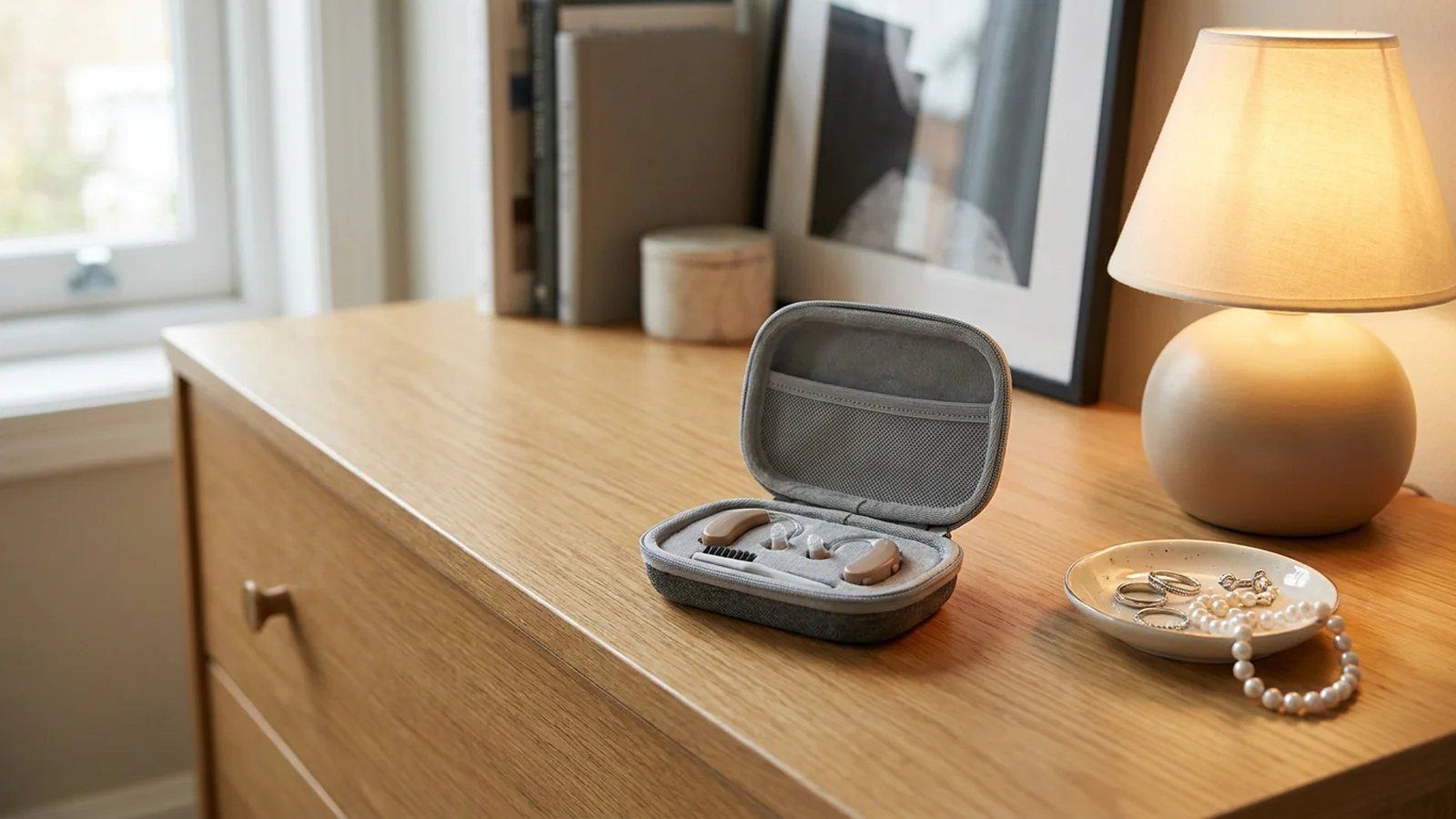
Hearing aids are small, valuable devices that you rely on every day, so it makes sense to look after them well. How you store and protect them when they are not in your ears can make a real difference. Good habits help keep them in good working order over time. This is a general guide to storing and protecting hearing aids.
This article shares general tips for storing and protecting your hearing aids. It is general information only. Your audiologist can give you guidance suited to your particular devices and daily routine. Our team looks after people across Brisbane and Logan, here in Australia.
Choosing a consistent storage spot
One of the simplest habits is to keep your hearing aids in the same place whenever you take them out. A consistent storage spot means you always know where they are. You are far less likely to misplace them.
Many people use a dedicated case or a designated drawer or shelf. Choosing somewhere safe, away from the edge of a bench or bedside table, also helps. It protects the devices from being knocked to the floor. A routine of putting them in the same spot each evening quickly becomes second nature.
It can also help to choose a spot that is easy to reach but out of the way of everyday clutter. Somewhere you will naturally pass, such as a bedside table drawer, works well. It makes it more likely you will use the same place every time.
Keeping hearing aids dry
Moisture is one of the things hearing aids do not get along with, so keeping them dry is important. It is generally wise to store them away from steamy bathrooms. Remove them before showering, swimming or other wet activities. A quick habit of taking them out before you get near water can save a good deal of bother.
Some people use a drying container or storage designed to help keep moisture at bay, particularly in humid conditions. Your audiologist can advise whether something like this suits your circumstances. They can also suggest how to keep your devices dry.
Avoiding heat and direct sun
Hearing aids should be kept away from excessive heat. Leaving them in a hot car, on a sunny windowsill or near a heater can expose them to high temperatures. These are not good for delicate electronics.
Choosing a cool, dry spot for storage helps protect the devices from heat-related issues. This is especially worth remembering during warm Australian summers. Cars and outdoor surfaces can become very hot indeed.
Storing safely away from children and pets
Curious children and pets can pose a surprising risk to hearing aids. Small devices and batteries can be tempting to little hands or inquisitive animals. Storing them well out of reach is a sensible precaution.
A high shelf or a secure drawer keeps them safely out of the way. This is particularly important with batteries. They should always be kept well away from children and pets for safety reasons.
Managing power during storage
How you handle power when your devices are not in use depends on the type you have. For rechargeable hearing aids, storing them in their charger is often part of the routine. For battery-powered devices, opening the battery compartment when not in use can help.
Your audiologist can explain the right approach for your particular devices. Following their guidance helps keep everything working reliably. It also takes the guesswork out of managing power day to day.
Using the protective case when travelling
When you are out and about or travelling, a protective case really comes into its own. Popping your hearing aids into their case whenever they are not in your ears helps shield them. It protects them from knocks, dust and moisture while you are on the move.
It also keeps them together in one place, so you are less likely to lose one. Getting into the habit of always using the case can simplify travel with hearing aids. It helps protect your investment.
A quick storage checklist
Keeping a few simple habits in mind can help your hearing aids stay safe and in good condition. None of them take much effort. Together they go a long way toward protecting your devices.
- Keep them in a consistent, safe spot away from edges
- Store them somewhere cool and dry, away from heat and moisture
- Keep devices and batteries out of reach of children and pets
- Use the protective case whenever you are travelling
When to ask your audiologist
If you are ever unsure about how to store or protect your particular devices, your audiologist is the right person to ask. They know your hearing aids. They can offer guidance suited to the type you have and the way you live.
It is also worth mentioning if you have noticed anything unusual, such as moisture or damage, so they can take a look. Looking after your devices well helps them keep working well. A little care each day tends to add up to fewer surprises down the track.
None of these habits are complicated, and most become automatic with practice. The aim is simply to give your hearing aids a safe, dry and consistent home whenever they are out of your ears. A hearing care professional can help if you are unsure where to start.
If you would like to learn more, or to arrange a hearing appointment, you are welcome to get in touch with our friendly team. No referral is necessary, and we are happy to answer any questions you may have.
DISCLAIMER:
The information on this website is provided for educational purposes only. We do not support, nor recommend any products or treatments without proper hearing diagnostic and proper hearing evaluation. All users must seek professional advice before beginning treatment as well as inform themselves of known side effects/risks associated with said procedure(s).
Disclaimer: The information in this article is general in nature and provided for educational purposes only. It does not take into account your individual circumstances and is not a substitute for professional advice. Please consult a qualified hearing health professional about your specific needs.
Related articles
- Getting the Most from Your Hearing Aids
- Caring for Hearing Aids in Winter
- Getting Ready for the Festive Season with Hearing Aids
Looking for a hearing test or ear care? See hearing tests, hearing aids or book an appointment. Browse all articles.