
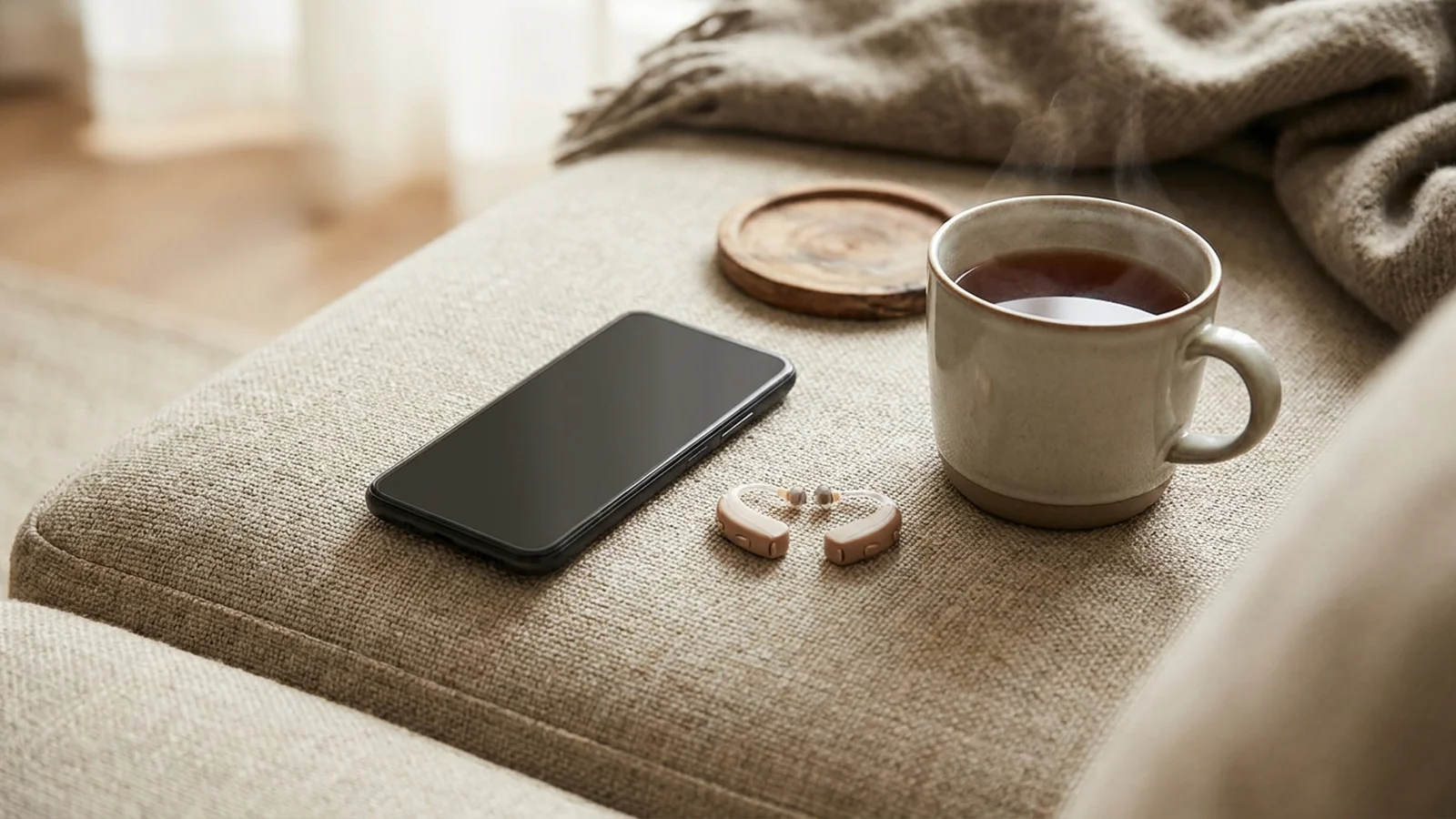
Talking on the phone is part of everyday life, whether it is catching up with family, booking an appointment, or chatting with a friend. If you wear hearing aids, a few simple ideas can help make phone calls feel more relaxed, so you can enjoy staying in touch. With a little practice, phone calls can become something to look forward to rather than something to feel unsure about.
This article shares general information to help you use the phone with confidence. For guidance tailored to your own devices, your audiologist can show you the features and settings that suit you well. A little trial and error, along with the right advice, can help, and there is no need to work it all out at once. As a friendly hearing clinic based in Brisbane, our audiologists help people across Brisbane, Logan and the wider community in Australia stay in touch. You are always welcome to get in touch.
Finding a good position for the phone
How you hold the phone can make a real difference. Because hearing aids pick up sound in a particular way, it can help to experiment with where you place the phone against or near your ear rather than assuming there is only one right way. A small change in position can sometimes change how a call sounds.
Some people find that holding the phone slightly above or angled towards the device works well. A little gentle trial and error helps you discover what feels most natural for you, and there is no need to rush the process. Over time, you will likely settle on a position that feels familiar, and it will become second nature without much thought.
Reducing background noise
Many people prefer a quieter setting for phone calls. Stepping away from busy surroundings, turning down a television, or moving to a calmer room can all support a conversation with fewer distractions. A quiet spot lets you give the call your full attention, which helps you concentrate.
This is a simple habit that many people find helpful, whether or not they wear hearing aids. A calmer background lets you focus on the voice on the other end, so the whole call feels more relaxed. It is a simple change that some people find useful. If a quiet room is not always possible, even turning down nearby noise for a moment can help you settle into the conversation.
Exploring helpful features on your hearing aids
Many modern hearing aids include features designed to support phone use. Your audiologist can explain what your particular devices offer and how to make the most of them, so you are not left wondering what is possible. Understanding your own devices can open up options you may not have realised were there.
Some devices are designed to work alongside phones in helpful ways, and features vary from one device to another. Rather than guessing, it is worth asking your audiologist what is available to you and how to use it. A quick demonstration can make everything much clearer.
Using speakerphone and hands-free options
Speakerphone is an option some people like to try, as the sound plays through the phone rather than being held to one ear. It also frees your hands, which many find convenient during a longer conversation or while doing something else. It is well worth trying to see whether it suits you.
Hands-free options can be worth exploring at home or in a quiet space where you feel relaxed. As always, trying different approaches helps you find what feels easiest for you and your devices. There is no single right choice, so it is fine to experiment until something feels right, and what suits one call may differ from another depending on where you are.
Simple habits for phone calls
A few small adjustments often make phone calls more relaxed. Building these into your routine can help you feel more at ease each time the phone rings, so calls become something you approach with confidence rather than hesitation.
- Try different phone positions near your device
- Choose a quieter spot when you can
- Consider speakerphone in a calm space
- Ask your audiologist about phone-friendly features
Taking your time on phone calls
There is no need to rush a phone conversation. It is perfectly reasonable to ask the other person to speak a little more clearly or to repeat something if needed, and most people are more than happy to help. A relaxed approach can help calls feel less rushed.
A relaxed pace often makes conversations flow more smoothly. Giving yourself permission to slow down can make a difference to how a call goes, especially when the line is not perfectly clear. There is nothing wrong with taking things gently.
When to ask your audiologist
If phone calls feel consistently difficult, it is well worth mentioning at your next appointment. Your audiologist can review your settings and talk through options designed to support phone use, so you do not have to work it out alone. A short conversation can reveal helpful ideas you may not have considered.
There is no reason to struggle quietly. A short conversation may reveal simple adjustments that help you on calls, and staying connected with family and friends is well worth it. Your audiologist is always happy to help you feel more confident on the phone, and to explain any options in a relaxed and unhurried way that suits you.
If you would like to learn more, or to arrange a hearing appointment, you are welcome to get in touch with our friendly team. No referral is necessary, and we are happy to answer any questions you may have.
DISCLAIMER:
The information on this website is provided for educational purposes only. We do not support, nor recommend any products or treatments without proper hearing diagnostic and proper hearing evaluation. All users must seek professional advice before beginning treatment as well as inform themselves of known side effects/risks associated with said procedure(s).
Disclaimer: The information in this article is general in nature and provided for educational purposes only. It does not take into account your individual circumstances and is not a substitute for professional advice. Please consult a qualified hearing health professional about your specific needs.
Related articles
- Getting the Most from Your Hearing Aids
- Caring for Hearing Aids in Winter
- What to Know About a Start-of-Year Hearing Check
Looking for a hearing test or ear care? See hearing tests, hearing aids or book an appointment. Browse all articles.