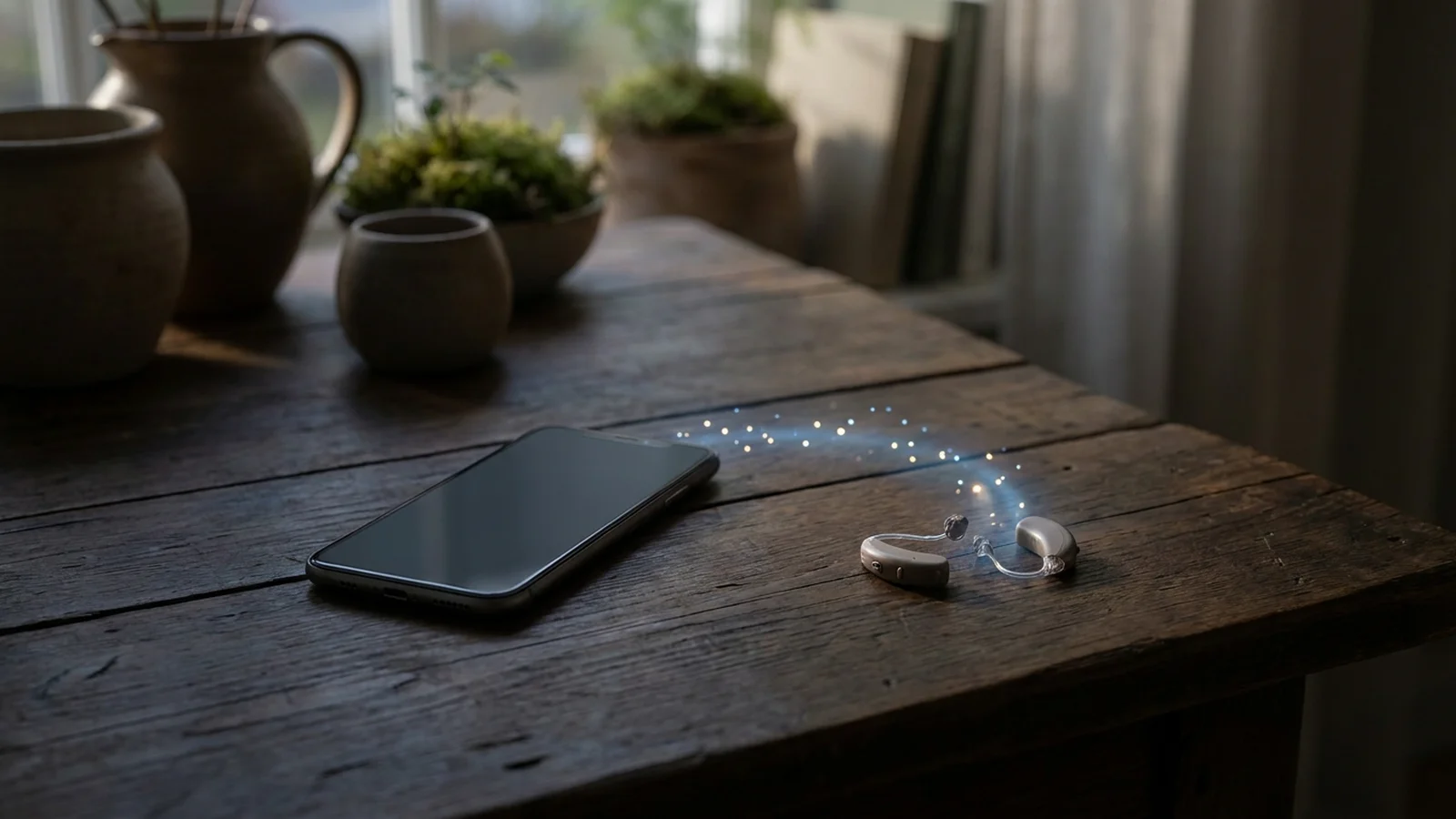
Many modern hearing aids can connect to other devices using Bluetooth, a form of wireless connection that has become part of everyday life. If you have heard people talk about streaming a phone call or listening to music through their hearing aids, Bluetooth is often what makes this possible. Understanding the basics can help you make sense of what this feature involves.
This is a general overview of how Bluetooth works with hearing aids and the kinds of things it can allow. It is not a recommendation of any particular product, and an audiologist is the right person to explain what a specific device can and cannot do. Features vary a good deal between devices, so a professional conversation is always worthwhile.
What Bluetooth Actually Is
Bluetooth is a way for two devices to talk to each other wirelessly over a short distance. It is the same kind of technology that connects wireless headphones or a car to a phone. When hearing aids include Bluetooth, they can form a similar wireless link with compatible devices nearby.
Because it works without cables, Bluetooth is designed to feel convenient in daily life. The connection generally works within a room or a short range, rather than across long distances. Understanding this helps set realistic expectations for how it behaves at home and out and about.
Connecting Hearing Aids to a Phone or Tablet
One of the most common uses is connecting hearing aids to a smartphone or tablet. Once paired, sound from the device can be sent directly to the hearing aids. This might include a phone call, a podcast, or audio from a video, depending on what the device supports.
Setting up this connection is usually done once, after which the devices can recognise each other again. Your audiologist or the device instructions can walk you through how pairing works on your particular hearing aids. Once it is set up, using it day to day tends to feel straightforward.
Streaming Sound With Bluetooth
When people talk about streaming, they usually mean sending sound straight from a device to the hearing aids without any separate headphones. For some people, the sound can be sent more directly. The sound travels wirelessly from the source to the hearing aids themselves.
Whether streaming is available, and how it works, depends on the specific hearing aids and the device they are paired with. A hearing care professional can explain what your own setup allows in plain terms. There is no need to be technically minded to make use of it.
Using Companion Apps
Many Bluetooth-enabled hearing aids can be paired with an app on a smartphone. These apps often let a person make small adjustments, such as changing settings for different surroundings. The app communicates with the hearing aids through the Bluetooth connection.
Apps vary from one device to another, so the features you see will depend on your hearing aids. Your audiologist can show you around the app that goes with your devices and explain what each part does. Having a walkthrough often makes an app feel far less daunting.
Things That Can Affect the Bluetooth Connection
As with any wireless connection, a few everyday factors can influence how Bluetooth behaves. Distance from the paired device, walls, and other electronics can all play a part. Keeping the connected device reasonably close is generally the simplest way to support a steady connection.
If you ever find the connection is not behaving as you expect, this is worth mentioning at a follow-up. Small tips or adjustments can often make everyday use smoother. There is no need to work things out entirely on your own.
Battery and Charging Considerations
Using Bluetooth features such as streaming can use more power than listening alone. For this reason, people who stream a lot may notice they charge or change batteries a little more often. This is a normal part of using wireless features.
If you like to use Bluetooth throughout the day, it can help to build charging into your routine. Your audiologist can talk through what to expect from your particular device's power use. A little planning helps keep everyday use smooth.
Speaking With an Audiologist About Connectivity
Bluetooth features vary widely between devices, so a good way to understand what is possible is to ask a knowledgeable professional. An audiologist can explain which features a device offers, how they work in everyday life, and how to set them up. They can do this at a relaxed pace and answer any questions along the way.
There is no need to feel that you must be technically minded to use these features. With a little guidance, many people find them a natural part of using their hearing aids. Asking questions is always encouraged.
Taking Your Time to Learn
There is no need to master every feature at once, and many people find it easier to explore connectivity gradually. You might begin with one simple use, such as taking a phone call, before trying anything else. As you gain confidence, you can add other features at your own pace.
If something does not work as you expect, it is worth remembering that this is common with any wireless technology. A hearing care professional can offer practical tips and talk through anything that seems puzzling. Learning gradually tends to make the whole experience feel far more relaxed.
Understanding how Bluetooth works with hearing aids can make the technology feel far less daunting. In simple terms, Bluetooth lets hearing aids connect to a phone or tablet, so streaming sound and using companion apps becomes part of everyday life. Pairing and connectivity can take a little practice, and that is completely normal.
If the Bluetooth connection or charging ever feels puzzling, there is no need to work it out alone. Our team in Brisbane and Logan can walk you through how Bluetooth works with hearing aids at a pace that suits you.
If you would like to learn more, or to arrange a hearing appointment, you are welcome to get in touch with our friendly team. No referral is necessary, and we are happy to answer any questions you may have.
DISCLAIMER:
The information on this website is provided for educational purposes only. We do not support, nor recommend any products or treatments without proper hearing diagnostic and proper hearing evaluation. All users must seek professional advice before beginning treatment as well as inform themselves of known side effects/risks associated with said procedure(s).
Disclaimer: The information in this article is general in nature and provided for educational purposes only. It does not take into account your individual circumstances and is not a substitute for professional advice. Please consult a qualified hearing health professional about your specific needs.
Related articles
- How Streaming Music and Calls Works With Hearing Aids
- Getting the Most from Your Hearing Aids
- Caring for Hearing Aids in Winter
Looking for a hearing test or ear care? See hearing tests, hearing aids or book an appointment. Browse all articles.