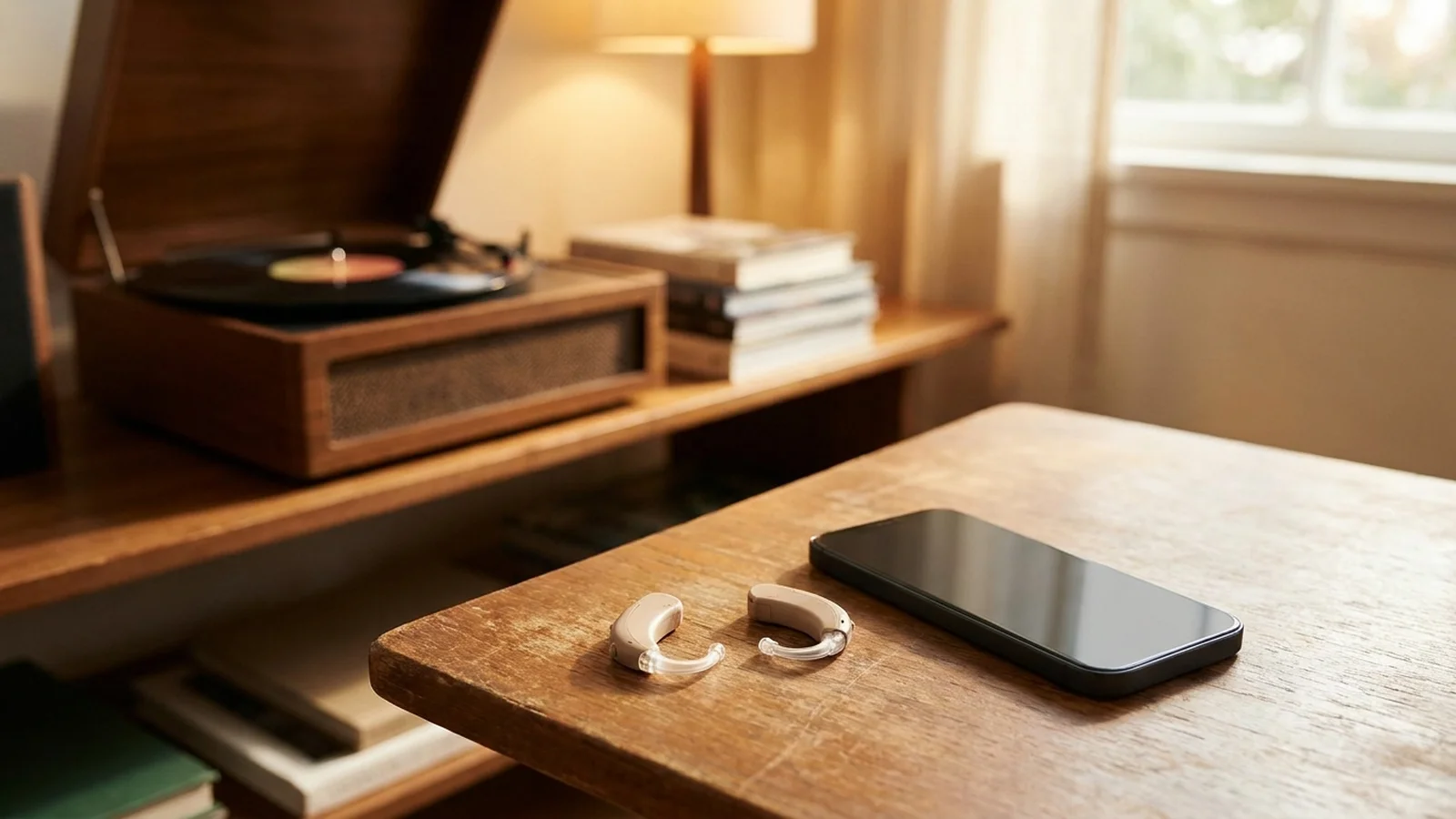
For anyone who enjoys listening to music or spends time on the phone, hearing aids that handle these tasks directly may be of interest. Some hearing aids with connectivity features are designed to stream music and calls straight to your ears. Understanding how streaming music and calls works with hearing aids can help you decide what suits you.
This article offers a general overview of streaming music and calls with connected hearing aids. It is general information only. Your audiologist can explain what particular devices are designed to do for your situation. Our team looks after people across Brisbane and Logan, here in Australia.
What streaming to hearing aids means
Streaming, in this context, means sending sound from another device, such as a phone, directly to your hearing aids without wires. Rather than listening through a separate speaker or earphones, the audio comes through the hearing aids you are already wearing.
This applies to different kinds of sound, including music and phone calls. The idea is to make use of the devices already in your ears. Certain everyday listening tasks can feel more integrated and convenient. Instead of reaching for a separate set of earphones, the hearing aids themselves handle the sound.
It is worth noting that streaming is one of several optional features, and not everyone chooses to use it. For those who enjoy music or spend a lot of time on the phone, though, it can be a genuinely handy part of daily life.
How streaming music generally works
When you stream music, the sound from your phone or other device is delivered through your hearing aids. This means you can enjoy your favourite songs or podcasts with the audio coming straight to your ears. There is no need to hold or wear anything extra while you listen.
The exact experience depends on the particular hearing aids and how they are set up. Your audiologist can talk through what streaming music is designed to do on your devices. They can help you feel confident using the feature and show you how to start and stop streaming.
How streaming calls generally works
For phone calls, streaming can allow the caller's voice to come through your hearing aids. Depending on the setup, this may help with handling calls. The sound is delivered directly rather than held against the ear.
How calls are managed varies between different devices, and some arrangements are more hands-free than others. An audiologist can explain how call streaming works with your particular hearing aids and what to expect in practice.
The role of your phone or device
Streaming relies on a connection between your hearing aids and another device, most often a phone. Because of this, the phone or device you use plays a part in how streaming works and what is possible.
Compatibility can depend on the specific hearing aids and the device you own, so it is worth checking how they work together. Mentioning your current phone to your audiologist helps them give you relevant, practical guidance.
Everyday situations people enjoy
People often mention certain everyday moments when talking about streaming. Examples include listening to music while going about their day, following a podcast on a walk, or taking a call without fumbling with the phone against their ear.
Whether these conveniences appeal to you depends on your habits and interests. Thinking about how you like to listen to music and handle calls can help. It shows whether streaming features would add value to your routine.
Managing everyday listening alongside streaming
A common question is what happens to the sounds around you while streaming. Some connected hearing aids let you stay aware of your surroundings while streaming. The balance can often be adjusted to suit the moment.
How this works depends on the device and its settings. Your audiologist can explain the options and help you find an arrangement that suits you. This applies whether you are streaming at home or out and about.
Getting the hang of it
As with any new feature, streaming can take a little practice before it feels familiar. Starting in a relaxed setting, such as listening to some music at home, is a gentle way to get used to how it works.
Your audiologist can show you the basics and answer any questions as you learn. With a little practice, streaming can become a familiar part of using compatible hearing aids.
Talking it over with an audiologist
If streaming music and calls sounds appealing, a good next step is to talk it through with a hearing care professional. They can explain which devices offer these features and how they might fit into your daily life.
Because everyone listens and communicates differently, individual advice is far more useful than general information alone. An audiologist can take the time to understand your needs and help you decide what suits you. There is no pressure to use a feature simply because it exists.
If streaming appeals to you, it can be a pleasant and convenient addition. If it does not, that is perfectly fine too. The most important thing is that your hearing aids work for the way you actually live day to day.
If you would like to learn more, or to arrange a hearing appointment, you are welcome to get in touch with our friendly team. No referral is necessary, and we are happy to answer any questions you may have.
DISCLAIMER:
The information on this website is provided for educational purposes only. We do not support, nor recommend any products or treatments without proper hearing diagnostic and proper hearing evaluation. All users must seek professional advice before beginning treatment as well as inform themselves of known side effects/risks associated with said procedure(s).
Disclaimer: The information in this article is general in nature and provided for educational purposes only. It does not take into account your individual circumstances and is not a substitute for professional advice. Please consult a qualified hearing health professional about your specific needs.
Related articles
- How Bluetooth Works With Your Hearing Aids
- Getting the Most from Your Hearing Aids
- Caring for Hearing Aids in Winter
Looking for a hearing test or ear care? See hearing tests, hearing aids or book an appointment. Browse all articles.