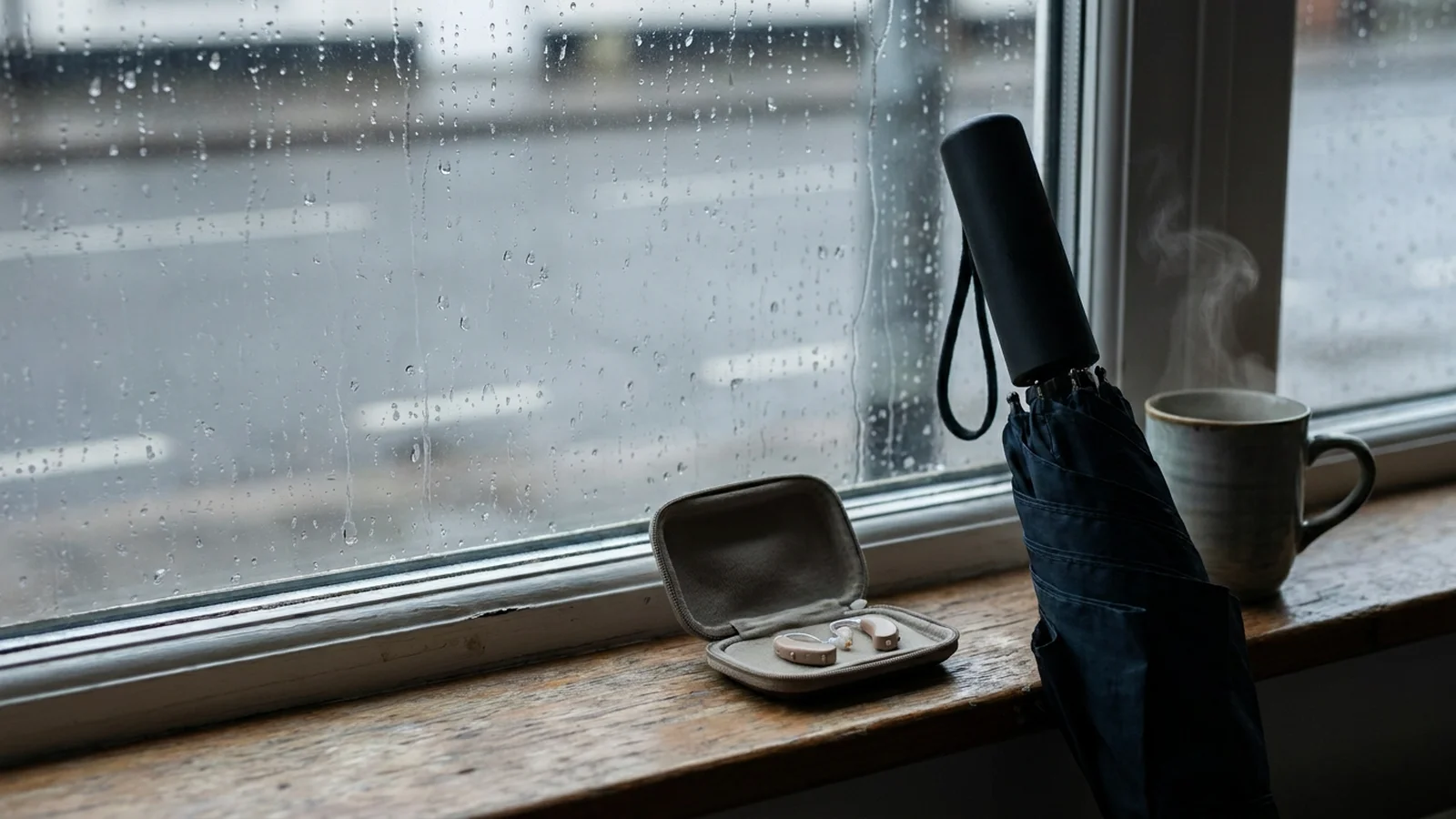
Cold, wet weather brings its own small challenges for anyone who wears hearing aids. Rain, damp air, and the changes between chilly outdoor conditions and warm indoor spaces can all introduce moisture. With a few gentle habits, it is straightforward to help keep your hearing aids dry through the cooler, wetter times of year.
This is general care information rather than advice for any specific device. Your audiologist can offer guidance tailored to your particular hearing aids and answer any questions about looking after them in wet weather. A little care during the damp months goes a long way, and the habits involved are simple ones. Once they become part of your routine, keeping your devices dry becomes a regular habit.
Why Moisture Matters for Hearing Aids in Cold, Wet Weather
Hearing aids are small electronic devices, and like most electronics they are happiest when kept dry. In wet weather, moisture can gather more readily, whether from rain, drizzle, or damp air. Being mindful of this helps you keep your devices in good day-to-day condition.
There is no need to worry unduly, as a little care goes a long way. Simply being aware of moisture during the wetter months is the first helpful step. Once these habits become routine, they take very little thought.
Staying Dry When You Are Out and About
When you head outdoors in the rain, a hood, hat, or umbrella can help keep your hearing aids sheltered. Keeping them protected from direct rain is a simple way to limit the moisture they are exposed to. A little planning before you step out can make a real difference.
If your hearing aids do get damp, gently wiping them with a soft, dry cloth once you are inside is a good habit. Being gentle is important, as the surfaces and openings are delicate. There is no need to rub hard, as a light touch is all that is required.
Drying Hearing Aids Gently After Damp Days
After a wet outing, giving your hearing aids a chance to dry can help protect them. Wiping them with a dry cloth and leaving them somewhere dry and airy overnight is a simple routine. Many people build this into their routine during the wetter months.
Some people use a drying container or system designed for hearing aids to help manage moisture. Your audiologist can explain whether something like this suits your device and how to use it. It can be a helpful companion to your everyday cleaning.
Managing Condensation Indoors
Moving from cold outdoor air into a warm room can sometimes cause a little condensation, much as it can on glasses. Giving your hearing aids a gentle wipe when you come inside can help manage any dampness. Letting them adjust to the indoor temperature for a moment is also sensible.
This is a common part of cold-weather wearing. A quick, gentle wipe is a common approach. Being aware of it means you can deal with it as it happens.
Storing Them Safely Overnight
Where you store your hearing aids overnight matters, particularly in wet weather. A dry, room-temperature spot away from bathrooms and damp areas is ideal. Keeping them in their case or on their charger, as appropriate for your device, helps protect them while you rest.
Consistent storage habits help you keep track of your devices too. Your audiologist can suggest what suits your particular hearing aids. Having a regular spot also helps you find them each morning.
Looking After Batteries and Charging
Cold and damp conditions can be worth keeping in mind when it comes to power. Whether your device uses batteries or charging, keeping the relevant parts dry supports smooth day-to-day use. Wiping contacts gently and keeping charging equipment in a dry place are simple steps.
If you notice anything unusual with power during wet weather, it is worth mentioning at a check. A hearing care professional can offer guidance suited to your device. There is no need to puzzle over it on your own.
When to Seek a Servicing Check for Your Hearing Aids
If your hearing aids feel damp, do not seem to be working as usual, or you are simply unsure, a servicing check is a sensible step. There is no need to struggle on if something does not feel right. A professional can look at the device and help look into it.
Regular servicing is a normal part of caring for hearing aids, and the wetter months can be a natural time to arrange it. Your audiologist is always happy to help. A quick check can offer real peace of mind.
Building Wet-Weather Habits
The nice thing about caring for hearing aids in wet weather is that a few small habits soon become routine. Reaching for an umbrella, wiping the devices dry when you come in, and storing them somewhere airy all become part of your everyday rhythm. None of it takes much time once it is part of your routine.
If you are unsure about anything to do with moisture and your particular devices, your audiologist can offer guidance suited to you. There is no need to work it all out alone. A short conversation can help you feel prepared for the wettest weather.
Caring for hearing aids in cold, wet weather is mostly about managing moisture with a few simple habits. Damp days and condensation can leave a little moisture behind, so gentle drying and thoughtful storage overnight both help. Looking after batteries and charging in cold weather is worth a moment of attention too.
If a device does not sound quite right after a wet spell, a servicing check is a sensible step. An audiologist in Brisbane is happy to look over your hearing aids and answer questions about cold, wet weather.
If you would like to learn more, or to arrange a hearing appointment, you are welcome to get in touch with our friendly team. No referral is necessary, and we are happy to answer any questions you may have.
DISCLAIMER:
The information on this website is provided for educational purposes only. We do not support, nor recommend any products or treatments without proper hearing diagnostic and proper hearing evaluation. All users must seek professional advice before beginning treatment as well as inform themselves of known side effects/risks associated with said procedure(s).
Disclaimer: The information in this article is general in nature and provided for educational purposes only. It does not take into account your individual circumstances and is not a substitute for professional advice. Please consult a qualified hearing health professional about your specific needs.
Related articles
- Caring for Hearing Aids in Winter
- A Simple Guide to Caring for Your Hearing Aids
- Getting the Most from Your Hearing Aids
Looking for a hearing test or ear care? See hearing tests, hearing aids or book an appointment. Browse all articles.