
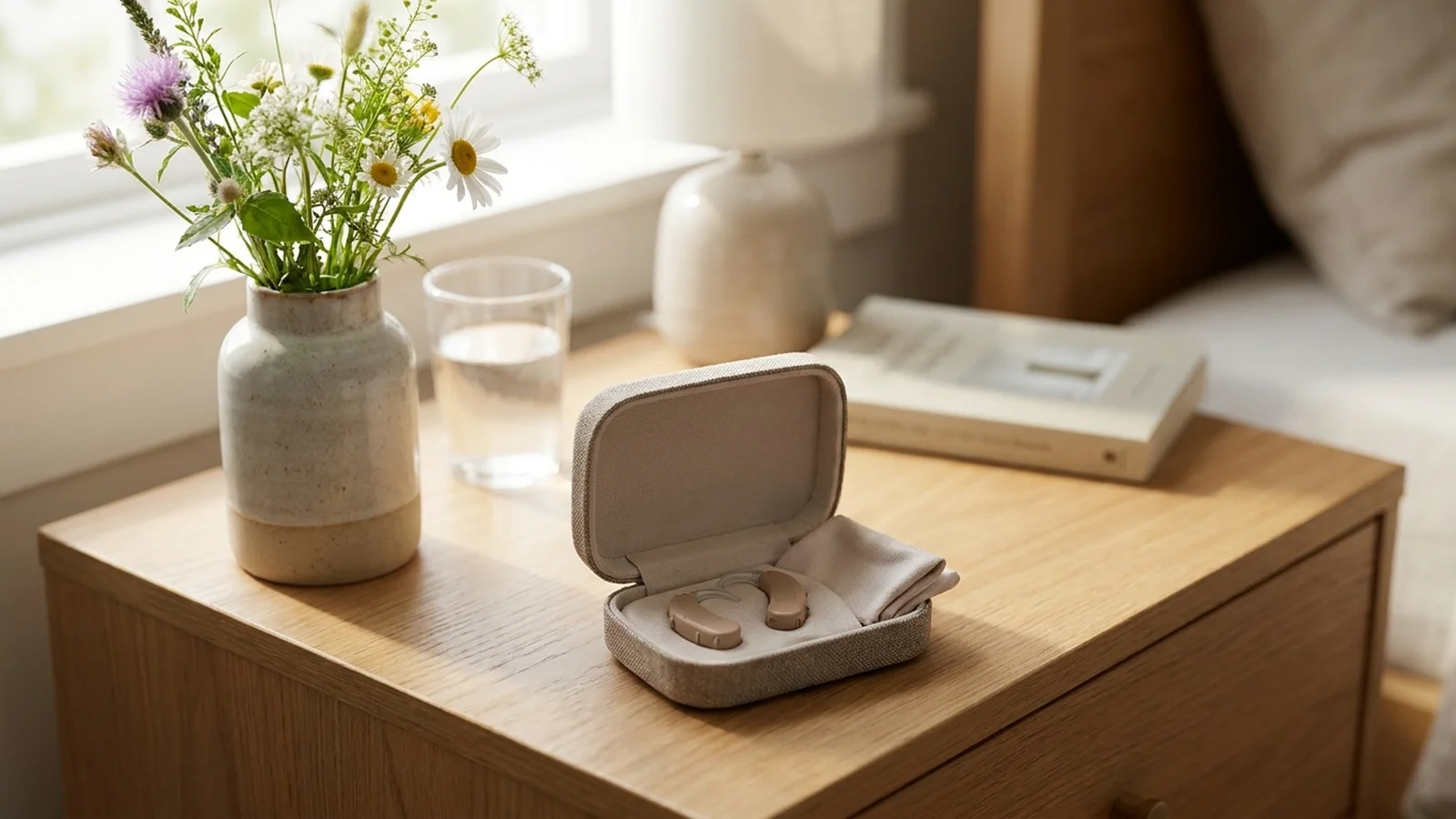
Hearing aids are small, thoughtfully made devices that become part of everyday life. Like anything you use daily, they benefit from a little regular care to keep them clean and in good condition. The good news is that looking after them can be simple once it becomes part of your routine.
This general guide walks through the main aspects of day-to-day hearing aid care. It is not advice for any particular device, and your audiologist can show you a routine suited to your specific hearing aids and answer any questions you have. A little and often tends to be easier than an occasional big effort, and the small habits soon become second nature. Before long, caring for your hearing aids becomes as ordinary as any other daily task.
A Gentle Daily Wipe for Your Hearing Aids
One of the simplest habits is giving your hearing aids a gentle wipe each day with a soft, dry cloth. This helps clear away everyday moisture and any residue that gathers through normal wear. It only takes a moment and is a nice way to end or begin the day.
It is generally better to avoid water, cleaning sprays, or wipes unless your audiologist has recommended something specific. A soft, dry cloth is usually all that is needed for daily attention. Keeping it simple makes the habit easy to maintain.
Keeping the Openings Clean
Because hearing aids sit in or near the ear, they can naturally gather a little earwax over time. Keeping the parts that sit in the ear clean helps keep them clean. Many devices come with small tools designed to gently clear the openings.
This is about the hearing aid itself. If you think earwax is building up in your ear, please see your GP or an audiologist rather than trying to clear it yourself.
Your audiologist can show you how to use these tools safely and how often to check. Learning the right technique helps you care for your device with confidence. There is no need to guess when a demonstration is readily available.
Keeping Moisture Away From Your Hearing Aids
Moisture is one of the main things to be mindful of with any electronic device. Damp weather, showering, and even everyday warmth can introduce a little moisture. Wiping your hearing aids dry and storing them somewhere airy overnight helps manage this.
Some people use a drying container made for hearing aids to help with moisture. Your audiologist can advise whether this suits your device and explain how to use it. It can be a helpful part of a simple routine.
Safe Storage When Not in Use
When your hearing aids are not being worn, keeping them somewhere safe and dry protects them. A dedicated case or charging spot away from bathrooms and damp areas works well. Storing them in the same place each time also makes them easy to find.
If you have pets or young children at home, keeping hearing aids out of reach is sensible too. A consistent storage habit keeps everything simple. Knowing where they are each morning takes one small worry out of the day.
Looking After Batteries or Charging
Depending on your device, you may use replaceable batteries or a rechargeable system. Either way, keeping the contacts clean and dry supports smooth day-to-day use. For rechargeable devices, building charging into your routine can make things effortless.
Your audiologist can explain how power works on your particular hearing aids. If you ever notice anything unusual, it is worth mentioning at a check. A little routine around charging keeps everyday use smooth.
Handling With Care
Hearing aids are small, so handling them thoughtfully helps avoid drops and knocks. Cleaning and adjusting them over a soft surface, such as a folded towel, can offer a little protection. Taking your time makes daily handling easier and more relaxed.
If you find the small parts fiddly, you are not alone, and there are techniques that can help. Your hearing care professional can show you approaches that suit you. A little practice usually makes handling feel more natural.
Regular Servicing and Checks With an Audiologist
Alongside your own daily care, regular servicing is a helpful part of keeping hearing aids in good shape. A professional can give them a thorough clean, check they are working as they should, and address anything you have noticed. This is a normal and worthwhile part of ownership.
Booking servicing at regular intervals means small things can be looked at before they become bothersome. Your audiologist can suggest a schedule that suits your device and your routine. A regular check works nicely alongside your daily habits.
Making Care Part of Your Day
The easiest way to keep up with hearing aid care is to weave it into things you already do each day. A wipe when you take them out in the evening, and a check as you put them in each morning, soon become effortless. Small, steady habits tend to work far better than occasional bursts of effort.
If you are ever unsure about any part of your routine, there is always someone to ask. Your audiologist can refresh your memory on techniques or suggest small changes that make daily care simpler. Feeling confident about looking after your devices helps you enjoy wearing them day to day. A little support at the right moment can make all the difference to how simple your routine feels, and it is always there when you need it.
This simple guide to caring for hearing aids really comes down to small, steady habits. A gentle daily wipe, managing earwax around the openings, and keeping moisture at bay all help keep your hearing aids in good order. Safe storage and looking after batteries or charging round out an easy daily routine.
Regular servicing keeps things ticking along, and there is no need to wait for a problem. Our team in Brisbane and Logan is happy to check your hearing aids and answer questions about caring for them day to day.
If you would like to learn more, or to arrange a hearing appointment, you are welcome to get in touch with our friendly team. No referral is necessary, and we are happy to answer any questions you may have.
DISCLAIMER:
The information on this website is provided for educational purposes only. We do not support, nor recommend any products or treatments without proper hearing diagnostic and proper hearing evaluation. All users must seek professional advice before beginning treatment as well as inform themselves of known side effects/risks associated with said procedure(s).
Disclaimer: The information in this article is general in nature and provided for educational purposes only. It does not take into account your individual circumstances and is not a substitute for professional advice. Please consult a qualified hearing health professional about your specific needs.
Related articles
- Caring for Hearing Aids in Winter
- Caring for Hearing Aids in Cold, Wet Weather
- A Simple Guide to Hearing Aid Cleaning Tools
Looking for a hearing test or ear care? See hearing tests, hearing aids or book an appointment. Browse all articles.