Many modern hearing aids include features beyond amplifying sound. One area that often surprises newcomers is connectivity. You may have heard that some hearing aids can connect wirelessly to phones and other devices. You might have wondered what that actually means in everyday life.
This article gives a general guide to streaming and connectivity features. It is general information only. Your audiologist can explain which features are available on particular devices and whether they suit your needs. Our clinics are in Rochedale South and Shailer Park.
What connectivity means for hearing aids
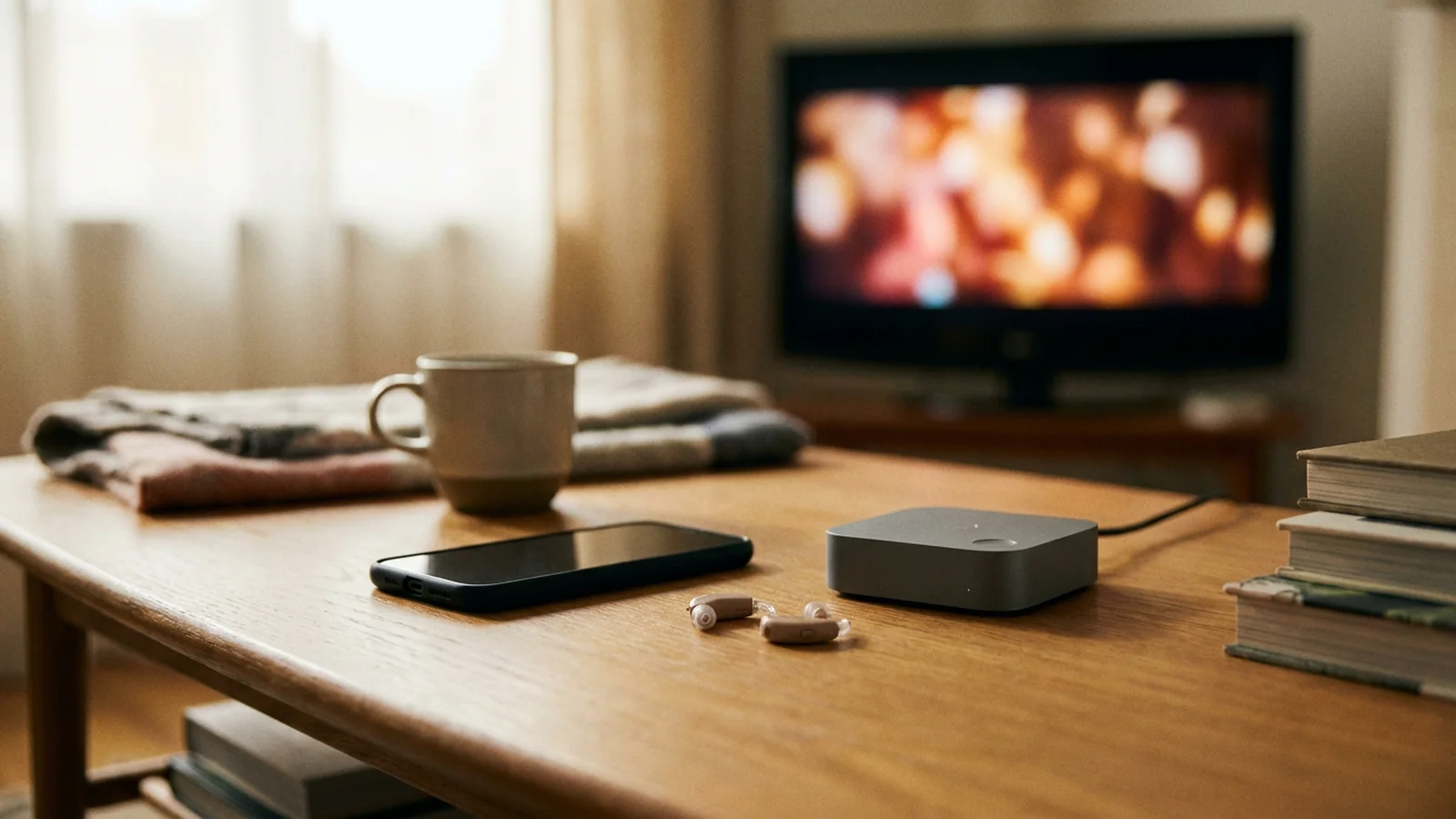
Connectivity refers to the ability of some hearing aids to link wirelessly with other devices. That might be a smartphone, tablet or television accessory. This wireless link is what allows sound or control signals to pass between the devices.
In practical terms, connectivity opens up a range of everyday conveniences. Rather than being purely standalone devices, connected hearing aids can work alongside technology many of us already use. For people who are confident with a smartphone, this can feel familiar.
It is worth saying that connectivity is an option rather than a requirement. Plenty of people use hearing aids very happily without ever connecting them to anything. These features are there to add convenience for those who want them, not to complicate things for those who do not.
Streaming sound to your hearing aids
One of the most talked-about connectivity features is streaming. This generally means sending sound directly from a device to your hearing aids. For example, audio from a phone call, music or a video can be delivered straight to your ears. It removes the need for separate earphones in many everyday moments.
This can make certain everyday tasks more convenient, as the sound comes through the devices you are already wearing. The specifics of what can be streamed depend on the particular hearing aids and the devices they connect to. Your audiologist can explain what is possible with a given set of devices.
Using companion apps
Many connected hearing aids come with a companion app for your phone. These apps often let you make simple adjustments yourself. You might change settings for different environments without needing to reach up to the devices.
An app can put a degree of control at your fingertips in a familiar format. Your audiologist can show you how an app works and help you get started with it. That way you can make the most of whatever features are available.
Connecting to the television
Watching television is a common situation where connectivity features come up. Some hearing aids can work with an accessory that sends the television's sound to your devices. You can then enjoy your programs alongside others in the room.
How this works varies between different hearing aids and accessories, so it is worth discussing your particular setup with an audiologist. They can explain what options exist for the devices you have or are considering.
Hands-free convenience
For some people, connectivity brings a welcome sense of hands-free convenience. Being able to manage certain sounds or settings through a phone or app can reduce how often you need to handle the devices directly.
The extent of this convenience depends on the features of your specific hearing aids. As with everything, it is about finding what genuinely helps in your own routine. Features for their own sake are not the goal.
Compatibility considerations
Not every hearing aid connects to every device, and compatibility can depend on the phone or accessory you use. Because of this, it is worth checking how a particular hearing aid works with the devices you already own.
An audiologist can help you understand what will and will not work together, so there are no surprises. Raising your existing devices during a conversation about connectivity helps them give you relevant, practical guidance.
Getting familiar with the technology
If you are not especially confident with technology, connectivity features can sound a little intimidating at first. The good news is that these features are generally designed to be manageable. You can learn at your own pace.
Your audiologist can walk you through the basics and answer questions as you go. Many people find that once they have had a little practice, using these features becomes familiar.
Deciding what matters to you
Connectivity features are helpful for many people, but not everyone needs or wants every option. What matters is thinking about your own daily life. Consider which conveniences would genuinely make a difference for you.
An audiologist can help you weigh up the features against your needs, so you focus on what is useful. Individual advice is always more valuable than a general list of possibilities. A hearing care professional grounds their guidance in your real routine. There is no need to use every feature simply because it is there.
Whatever you choose, the technology is meant to serve you rather than the other way around. Starting with the conveniences that would genuinely make a difference, and leaving the rest for later, is a sensible way to approach it.
If you would like to learn more, or to arrange a hearing appointment, you are welcome to get in touch with our friendly team. No referral is necessary, and we are happy to answer any questions you may have.
DISCLAIMER:
The information on this website is provided for educational purposes only. We do not support, nor recommend any products or treatments without proper hearing diagnostic and proper hearing evaluation. All users must seek professional advice before beginning treatment as well as inform themselves of known side effects/risks associated with said procedure(s).
Disclaimer: The information in this article is general in nature and provided for educational purposes only. It does not take into account your individual circumstances and is not a substitute for professional advice. Please consult a qualified hearing health professional about your specific needs.
Related articles
- A General Guide to Ear Wax and Microsuction
- A Guide to Hearing Aid Controls and Volume
- A Guide to Hearing Aid Accessories
Looking for a hearing test or ear care? See hearing tests, hearing aids or book an appointment. Browse all articles.